Advertising & Branding /
UV or Eco-Solvent Printing for Signs That Live Outdoors
The ink label alone cannot establish outdoor sign durability. Ask what the complete printed and finished system is intended to withstand.
By Auronix Advertising
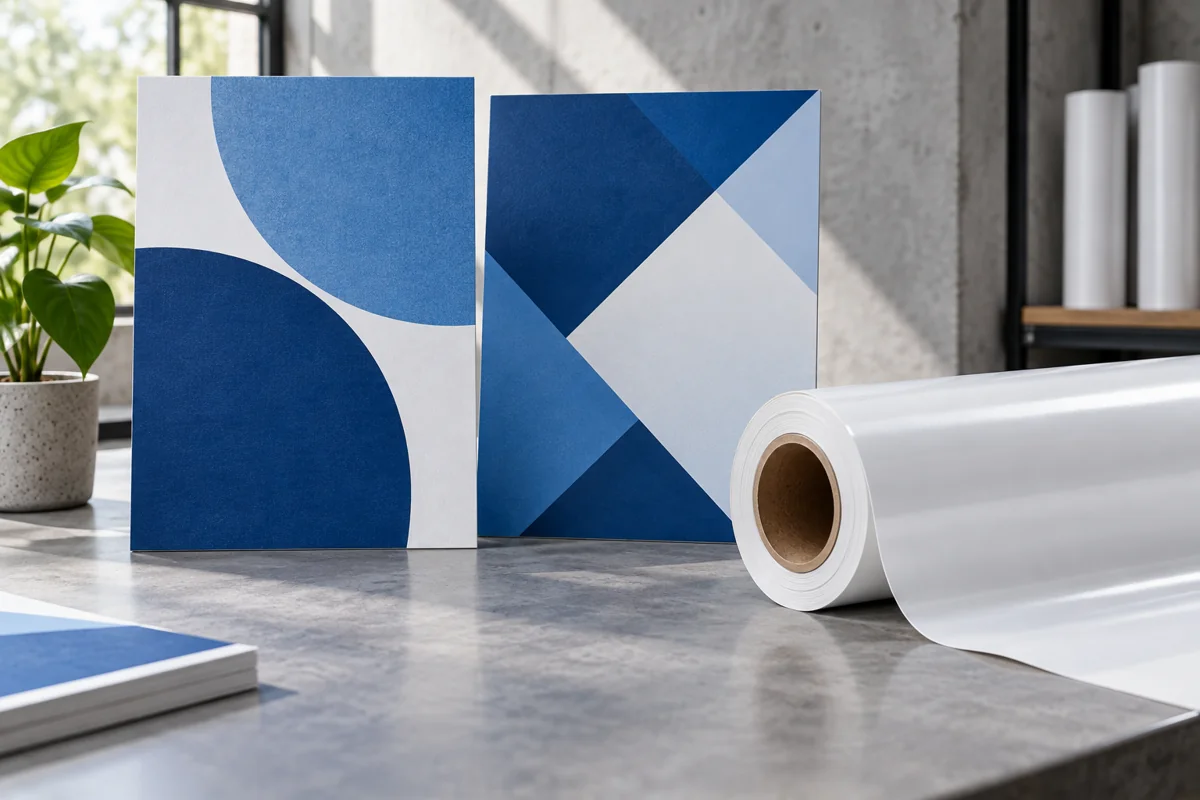
One supplier recommends UV printing, another proposes eco-solvent, and both describe the result as suitable for outdoor use. The labels sound like a direct comparison, but they leave out the material being printed, any protective finish and the conditions in which the sign will be displayed.
Start by specifying the finished object. A rigid entrance panel, an adhesive graphic on a curved surface and a short campaign banner are different jobs. The useful buying question is which complete print system suits that job, with evidence the supplier can explain and a sample you can evaluate.
Describe the outdoor application precisely
Tell suppliers where the sign will be placed, how it is oriented and how long the business intends to use it. Explain whether it is sheltered, handled frequently or exposed to cleaning and contact. Provide photographs rather than expecting the word "outdoor" to communicate every relevant condition.
Separate visual life from campaign duration. A promotion ending in a month may not need the same ownership plan as a permanent entrance graphic, but it still needs appropriate performance during its intended use. Avoid paying for an unsupported lifespan claim when the business actually needs a clear short-term display.
Describe how the sign will be mounted or applied, with technical decisions assigned to the responsible supplier. The print process cannot be selected independently of the substrate and intended form. A process demonstrated on a flat board does not automatically establish suitability for a stretched or curved application.
Ask for the whole system by name
Request the ink formulation, printer or approved process, media and any laminate, coating or other finish. The quotation should identify the components that support the stated application. If a supplier proposes a direct print onto a rigid panel, identify that actual panel and surface treatment too.
Manufacturer information shows why this matters. Roland DG lists multiple ink families for different applications, while its ECO-UV range includes distinct formulations and compatible devices. A broad technology label does not identify every property of the final print.
Ask whether the quoted combination follows the relevant manufacturers' guidance. If a component is changed to reduce cost or meet a deadline, the supplier should review the consequences rather than assume the original durability statement still applies unchanged.
Keep this request practical. The buyer does not need to choose the printer settings. The supplier needs to identify a suitable system and explain the basis for the proposed result, leaving the buyer with enough information to compare and later reproduce the job.
Separate the ways a graphic can disappoint
"Durable" can refer to several different concerns. Colour change, surface scratching, loss of adhesion, cracking or damage to the underlying panel are not the same outcome. Ask which issue the proposed specification addresses and which performance statements apply to the complete finished graphic.
If the sign sits where people or cleaning equipment can touch it, discuss that contact explicitly. A statement about outdoor colour performance does not automatically answer a question about abrasion. Likewise, a scratch-resistant sample does not prove how its colours will appear after prolonged exposure.
Avoid asking which technology always lasts longer in UAE conditions. That question is too broad to resolve without the actual products and application. Ask instead for the expected performance and applicable warranty of the specific quoted combination in the stated location.
Use representative samples
Request samples produced on the proposed material with the intended finishing system. Include the actual brand colours, fine details and any areas where opacity matters. A supplier's attractive sample printed on a different substrate is useful inspiration but not an acceptance sample for your order.
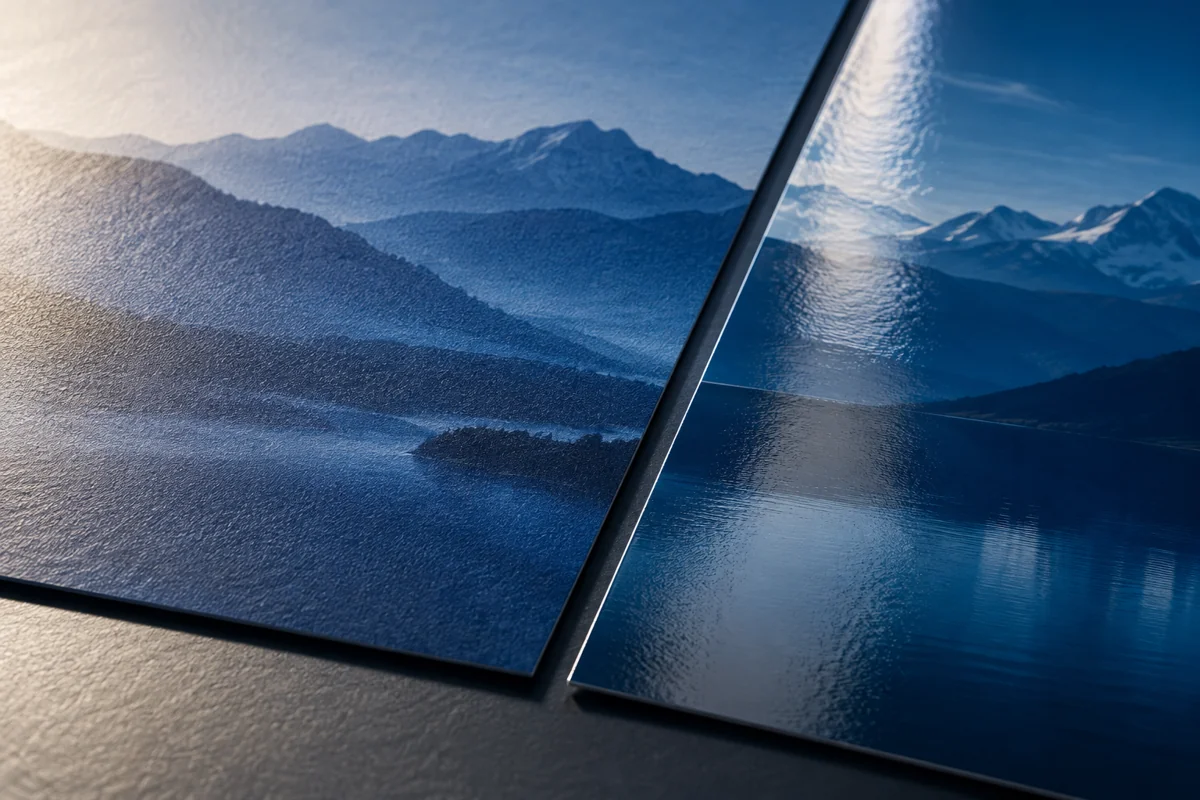
Review the sample under the light in which the sign will normally be seen. Gloss, texture and reflections can affect the appearance even when the colour values in the artwork are unchanged. Compare alternatives in the same conditions rather than approving one under showroom lighting and another outdoors.
If the sign is viewed from a distance, inspect a representative area at that distance as well as close up. A finish that looks interesting in a hand sample may not contribute anything useful to the actual viewing experience. The sample should support the business purpose, not merely demonstrate a printing effect.
Ask what testing establishes and what it does not
The supplier may need to assess adhesion or compatibility on the production material. Ask what review is appropriate and how its result will be recorded. Do not perform improvised destructive tests on an installed customer sign or treat a casual fingernail scratch as a complete technical evaluation.
A short sample check can identify an immediate mismatch, but it cannot reproduce years of outdoor exposure. Keep those two types of evidence separate. If a long-term performance claim matters to the purchase, request the relevant product documentation and warranty conditions.
Be cautious with photographs showing one faded print beside another fresh print. Without knowing the materials, exposure history and age, the comparison proves little about the technologies. A persuasive sales image should not replace an identified test method or a relevant manufacturer statement.
Clarify the role of the protective finish
Ask whether the proposal includes a laminate, a printed protective layer, another coating or no added finish. Have the supplier explain why that choice suits the application and how it relates to the cited product guidance. More layers should not automatically be presented as better performance.
For a graphic that will be bent, wrapped or otherwise shaped, the compatibility of all layers matters. Have the supplier confirm the complete assembly rather than selecting a finish only because it looks appealing on a rigid sample board.
Include the final surface appearance in the accepted specification. If one bidder quotes a glossy finish and another a matte finish, decide whether either is acceptable before comparing the prices. The difference may influence the visual result even when both systems are suitable for the intended duration.
Compare delivery assumptions fairly
Ask when the complete graphic will be ready for its intended installation, including any process stages required by the supplied system. Do not equate the moment a print exits a machine with readiness for every subsequent operation. Let the supplier describe its validated production sequence.
If the deadline is tight, discuss whether an alternative complete system can meet it without dropping a required step. The buyer should receive an explicit revised proposal, not discover after delivery that the material or finish was changed to save time.
Keep installation and site readiness visible in the programme. A finished panel waiting for an unresolved fixing or access arrangement does not benefit from a faster printing process. Compare the whole route to a usable sign rather than the speed of one machine stage.
Check consistency across the order
For several signs, agree how the supplier will identify the approved production version and review consistency across the batch. A later reprint may be made at another time, so retain a usable reference rather than expecting a colour name alone to communicate the original appearance.
If exact brand matching is commercially important, state that before quotation and ask what matching process is available. Do not introduce a more demanding colour expectation only after accepting a general print sample, when the basis of the order has already been set.
Make durability promises reviewable
Ask for written conditions identifying the relevant application, region, orientation and maintenance assumptions. Separate expected performance from warranty coverage and confirm what remedy is actually offered. A broad statement that ink is outdoor-rated is not the same as coverage for the entire installed sign.
Retain the approved sample, production files and system identifiers after delivery. If a future panel needs replacement, those records provide a starting point for a meaningful match. Reordering only by the phrase "UV print" leaves too much of the original specification unknown.
For a hypothetical shop replacing a frequently cleaned entrance panel, abrasion and cleaning compatibility may deserve more attention than a dramatic fade-resistance claim. A short promotional banner elsewhere may be driven by a different set of requirements. Both decisions can be reasonable without declaring one ink technology universally superior.
An Auronix UV printing enquiry can begin with the intended object, location and campaign duration. Coordinated fulfilment should compare the relevant complete systems, so the buyer accepts a defined print and finish rather than an attractive process name followed by assumptions.
FAQs
Is UV printing always more durable outdoors?
No universal ranking follows from the technology name alone. Compare the exact ink, substrate, finishing system and intended exposure, then request the relevant manufacturer evidence and applicable warranty conditions.
What should an eco-solvent quotation identify?
Ask for the actual ink system, media, finish and application scope, just as you would for a UV proposal. A generic technology label leaves too many variables unresolved for a fair comparison.
Does scratch resistance establish fade resistance?
They concern different forms of performance. Explain which problems matter at your location and ask the supplier for evidence that addresses those specific concerns rather than one broad durability adjective.
Should the sample use my actual artwork?
Include representative colours, details and any opacity-sensitive areas from the real design. Produce it on the proposed material with the intended finish so the review relates to the order being considered.
Can a small sample prove several years of outdoor life?
A short review can reveal immediate appearance or compatibility issues, but it cannot reproduce long-term exposure. Use relevant technical documentation and warranty terms for claims extending beyond what the sample demonstrates.
Is a laminate always necessary?
The appropriate finish depends on the specified system and use. Ask the supplier to explain the proposed arrangement under the relevant product guidance rather than applying a blanket rule to every outdoor print.
Why compare samples under the same light?
Different lighting can change the apparent colour, gloss and texture. Reviewing alternatives together under relevant conditions helps the buyer assess the actual finish instead of differences created by the demonstration setup.
Can a printer-speed claim establish the delivery date?
No. Confirm the full production, finishing and installation programme, including the supplied system's required stages. A fast print stage does not resolve site access, preparation or other outstanding project dependencies.
What should happen if a quoted material is substituted?
Ask the supplier to identify the change and review its effect on appearance, compatibility and performance conditions. Approve a revised specification or sample where needed before treating the substitution as equivalent.
What records help with future matching panels?
Keep the production artwork, approved sample and complete ink, media and finish identification. Those details allow a supplier to assess a replacement accurately instead of guessing from a faded panel or generic invoice.
