Advertising & Branding /
How to Make Roll-Up Banner Artwork and Film Survive Repeated Setup
Roll-up banners last when the film is a lay-flat polyester display film, key artwork stays clear of the cassette and top rail, and the graphic is retracted slowly every time.
By Ashker
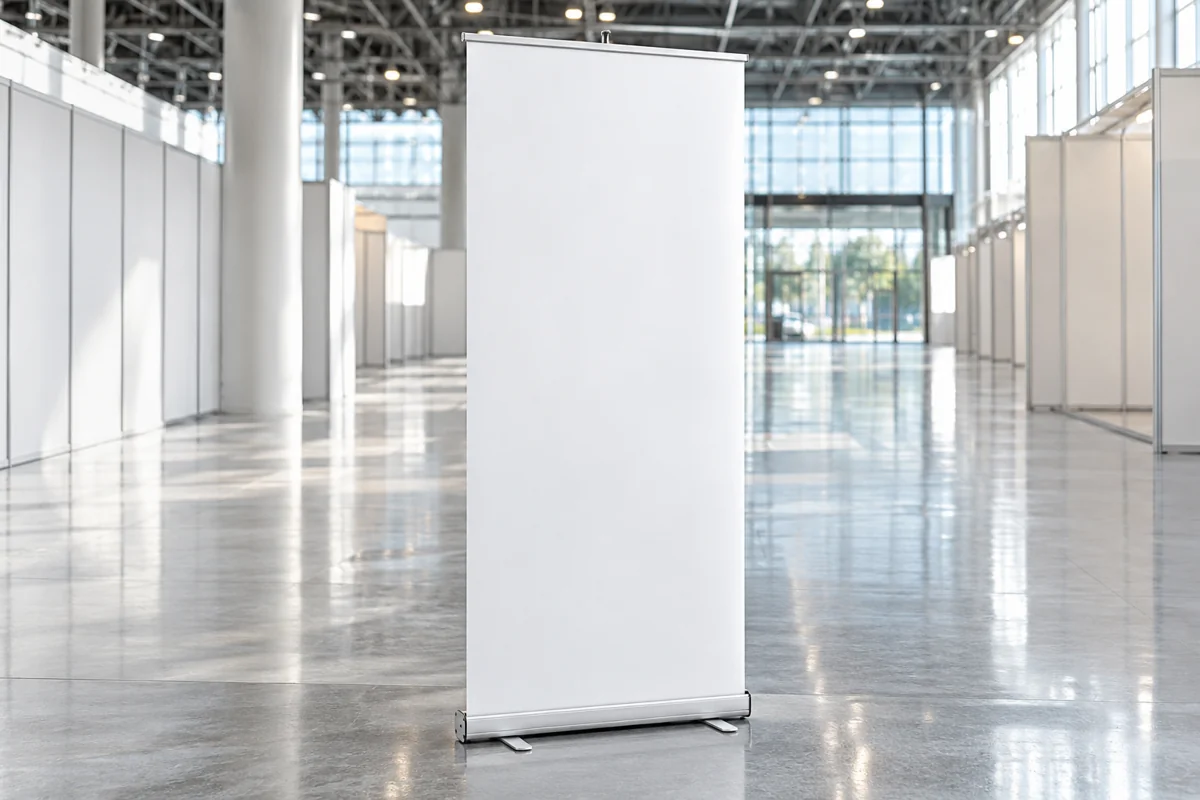
A roll-up banner usually looks perfect at its first event. After a dozen setups, the edges start to curl, a crease appears near the base and the phone number sits half inside the cassette. The stand itself is rarely the problem. Most of these failures trace back to the film, the artwork layout or the way the graphic is packed.
This guide explains how to specify a roll-up banner that still looks sharp after many events in the UAE. It covers why graphics curl, what to keep out of the hidden zones and which film properties matter. It also explains setup and packing habits that protect the print. Finally, it shows when to replace the graphic instead of the stand.
Why do roll-up banners curl and crease?
Curl comes from using a film that was never designed to be rolled tightly again and again. Display films made for banner stands are engineered to lie flat after rolling. Sihl, for example, describes its PolySOL 7S film as built to withstand repeated rolling without cupping or warping.
Creases are different, because they usually come from handling rather than material. The most common cause is letting the graphic snap back into the cassette unguided. A crease across a polyester film rarely disappears, so prevention matters more than any later repair.
Quick Answer
Roll-up banners curl when the print uses a film not designed for repeated rolling. Creases come from letting the graphic snap back into the cassette, so slow retraction protects it.
What should artwork keep away from the base and top rail?
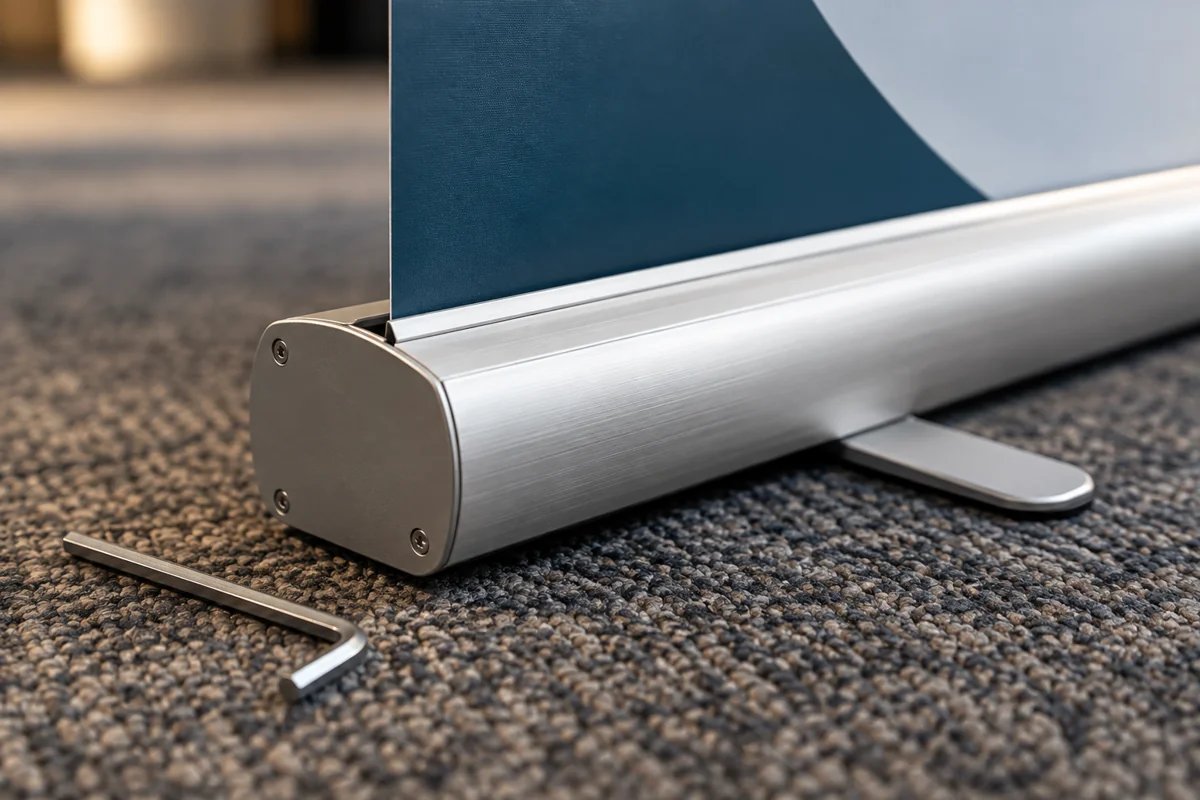
The bottom of the graphic sits inside the cassette and never shows when the stand is open. The top edge is clamped inside the rail, which hides a smaller strip. Both depths vary by stand model, so one generic template is risky.
Ask the supplier for the artwork template of the exact stand you are buying. Keep logos, phone numbers and QR codes well above the lower section, which tables and visitors often block anyway. Run background colour into the hidden zones so no white edge appears at the base.
Quick Answer
Roll-up artwork must keep logos, phone numbers and QR codes clear of the cassette zone and the top rail. Use the template for your stand model, because hidden depths vary.
Which film properties matter for repeated setup?
Choose a polyester display film made specifically for retractable stands, with lay-flat behaviour stated on its datasheet. A grey or silver back stops light passing through and washing out colours. Briteline Roll-Up film, for example, is an 8 mil polyester with a grey back and anti-curl technology.
Check opacity, finish and ink compatibility before approving the quote. Sihl states over 99% opacity for PolySOL 7S, and Neschen offers a PVC-free polyester roll-up film with a silver reverse. A satin finish also reduces glare under the bright lighting of exhibition halls.
Quick Answer
For repeated setup, choose a polyester display film with a lay-flat claim, a grey or silver blockout back and a satin finish. Confirm opacity and ink compatibility on its datasheet.
How should a roll-up banner be set up and packed?
Pull the graphic up steadily by the top rail and hook it onto the pole first. To pack, lift the rail off the pole and guide it all the way down by hand. Never let the spring pull it back at speed.
Wipe dust off the base before retracting, because grit rolled into the cassette scratches the print. Keep the stand in its padded bag, and avoid leaving it in a parked car during a UAE summer. Heat and hard knocks shorten the life of the graphic and the spring.
Quick Answer
Set up a roll-up banner by pulling the rail onto the pole, and pack it by guiding it down by hand. Store it bagged, clean and away from car heat.
When should you replace the graphic instead of the stand?
Replace the graphic when it curls at the edges, shows creases or carries outdated details. A good aluminium stand can outlast several graphics, so reprinting can cost far less than buying again. Ask if your stand accepts replacement graphics or a replacement cassette.
Some budget stands bond the graphic permanently to the roller, which makes a swap impractical. Others let a technician fit a new print with tape or a clamp rail. Knowing which type you own helps you decide whether to reprint the graphic or buy a new stand.
Quick Answer
Replace a roll-up graphic when it curls, creases or shows outdated details, provided the stand accepts a new print. Budget stands with bonded graphics often need replacing as one unit.
Main Takeaways
Roll-up banners fail mainly through the wrong film, poor artwork layout or rough handling between events. Choose a lay-flat polyester display film with a blockout back and a satin finish. Keep logos and contact details clear of the cassette and top rail, using the exact stand template. Retract the graphic slowly by hand and store it bagged, clean and cool.
Ordering roll-up banners that last
A durable roll-up banner starts with the right questions rather than the lowest price. Ask which film the supplier uses, and request its datasheet showing lay-flat and opacity claims. Request the exact artwork template, and check your design against the hidden zones before approving. Then show whoever packs the stand at each event how to guide it down slowly.
For a quote, share the stand size, quantity, event dates and if you need replacement graphics. Auronix Advertising coordinates roll-up banners and backdrops and wider exhibition stands through partner producers. For larger travelling exhibition kits, read our guide to an exhibition stand that packs into two cases. We will confirm the film, laminate and template details in writing before printing starts.
Sources & References
FAQs
What size is a typical roll-up banner?
There is no regulated standard size for roll-up banners. Common stands show roughly 85 cm by 200 cm, but sizes vary widely, so confirm your supplier's exact template before designing.
Can roll-up banners be used outdoors?
Most roll-up stands are designed for indoor use because their tall graphic catches wind easily. Briteline lists its roll-up film for indoor applications, so check the datasheet before outdoor use.
Should a roll-up banner be laminated?
Lamination adds scratch protection, but is not always required. Sihl states PolySOL 7S is intended for unlaminated use, while Briteline recommends allowing up to 24 hours before laminating its film.
Why can I see light through my roll-up banner?
The film probably lacks a blockout back, so lighting behind the stand shows through the print. A grey or silver backed display film prevents that show-through and keeps colours strong.
What resolution should roll-up artwork use?
Supply artwork at full size and at the resolution your supplier specifies for its printers. Check that photographs remain sharp at full scale, because enlarged web images often look soft.
How long does a roll-up banner graphic last?
It depends on the film, handling and storage, so no honest supplier gives one fixed figure. Careful retraction, padded bags and cool storage noticeably extend the life of a graphic.
Can I reuse my roll-up stand with new artwork?
Often yes, if the stand accepts replacement graphics or a replacement cassette. Ask the supplier before ordering new artwork, because some budget stands bond the print permanently to the roller.
Is PVC-free roll-up film available?
Yes, several media manufacturers make PVC-free polyester or polypropylene roll-up films. Neschen, for example, launched PVC-free roll-up films for display systems, including a polyester option with virtually no side curl.
What should go at the top of a roll-up banner?
Put your logo and the main message in the upper third, where people see them across a busy hall. Keep the lower section for supporting images and background colour only.
How should roll-up banners travel between events?
Carry them in padded bags, upright where possible, and never stack heavy cases on top. Check the base, feet and pole before each event so nothing goes missing on site.
