Advertising & Branding /
Making Vehicle Branding Visible After Dark Without Breaking the Rules
A bright flash photograph cannot tell you whether reflective branding is appropriate for your vehicle or its operating conditions.
By Auronix Advertising
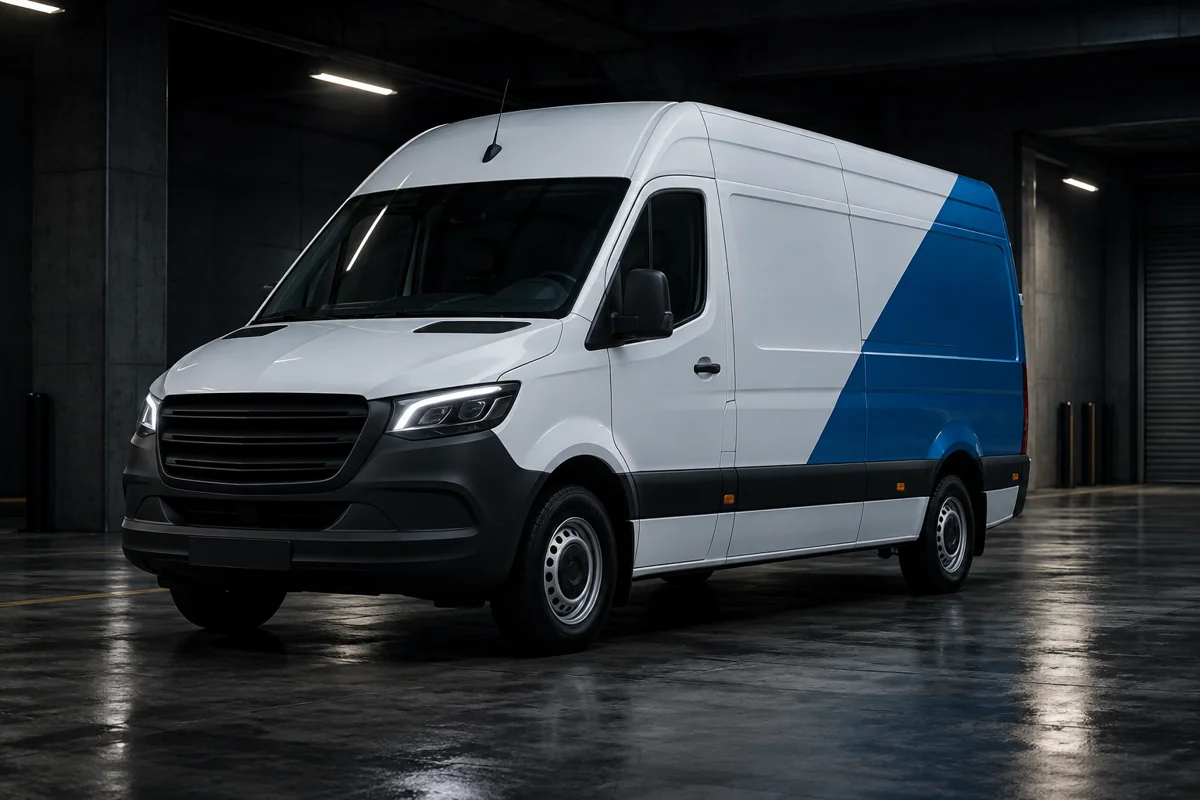
A reflective logo can look spectacular in a phone photograph taken with flash. That photograph answers a narrow question: what the sample looked like with that camera and light source in that position. It does not prove how easily customers will recognise the vehicle on an evening delivery route.
For a business buying reflective vehicle branding, the decision has three parts. Establish what the graphic is intended to communicate, confirm the applicable permissions, and evaluate the proposed material under relevant viewing conditions. Keep those parts connected without allowing a visually impressive sample to answer regulatory or safety questions.
Define the job of the reflective element
Start with the actual business situation. Perhaps customers struggle to identify a service van parked outside a building after dark. Perhaps the fleet needs a consistent identity during early-morning deliveries. Write down that recognition problem before choosing a reflective strip, logo panel or larger graphic.
Do not merge decorative branding with any required vehicle safety marking. A commercial logo and a regulated conspicuity arrangement can have different purposes and specifications. The responsible fleet professional should identify any mandatory markings and ensure the proposed branding does not compromise them.
A supplier's description of a product as reflective does not establish that it is approved for every vehicle application. Ask which exact film is proposed and what role it will serve. That is more useful than requesting the brightest available material without a defined placement or purpose.
Understand what the product evidence covers
For example, 3M describes Scotchlite Print Wrap Film 780mC as a retroreflective print film. That identifies a product category and intended graphic applications; it does not grant permission to use a particular design on a particular UAE vehicle.
Request the current technical documentation for the proposed film, print and protective finish. Ask the supplier to identify the application limits relevant to the actual panels. A flat sample and a deeply shaped vehicle surface are not equivalent evidence of suitability.
Do not import a published performance duration from another region into the quotation as an unconditional local warranty. The useful written answer names the system, intended application, applicable territory and coverage conditions. Keep the document reference with the quote so later substitutions remain visible.
Check permissions before finalising placement
Dubai's Mada Media vehicle advertising service sets out vehicle-advertising application information and conditions. Its current page requests designs showing all four sides and a mock-up. Use the applicable live process to review the intended design, rather than assuming a previous ordinary-vinyl approval covers a changed reflective treatment.
Ask the responsible applicant specifically about the vehicle category, proposed material, colours and placement. If the answer requires clarification from the reviewing body, keep that issue open until it is resolved. Do not invent a universal brightness allowance or a list of supposedly permitted panels from general wrap advice.
Record ownership and operating arrangements too. A leased vehicle or a vehicle used for a specialised purpose may introduce additional questions. The correct response is a documented review for that vehicle, not an assumption that a decorative graphic is exempt because it is small.
Build a sample that represents the final design
Ask for a sample using the intended printed colours and finishing system. A bare reflective swatch may look different from a printed, protected graphic. If the design depends on a dark background and a small reflective name, assess that combination together.
Keep a normal daylight review in the process. The graphic still has to work while the vehicle is parked outside the customer's premises at noon. Check colour relationships, the legibility of the name and whether the reflective element visually competes with essential business information.
Use a restrained information hierarchy. A company name and a clear service description can be more useful than filling the available panel with small contact details. Decide which information somebody should recognise at a glance and which details belong on the website or another stationary customer touchpoint.
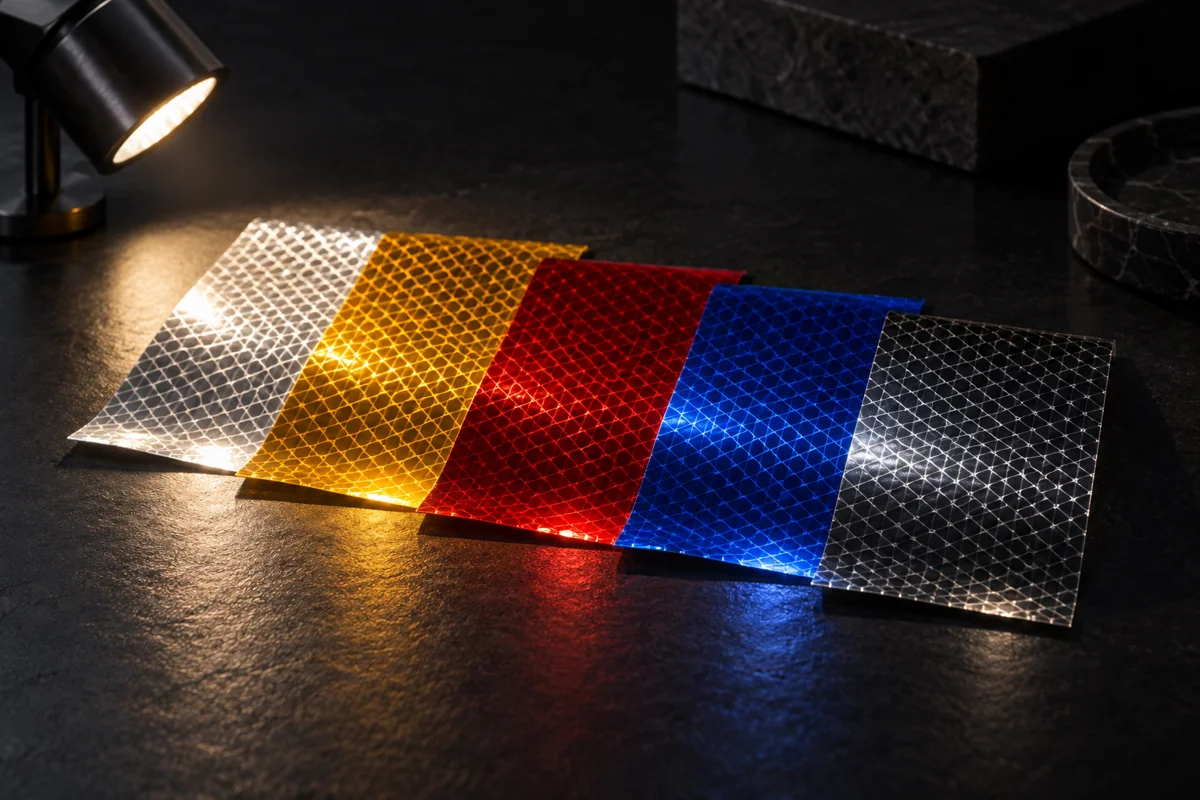
Run an evening review in a controlled place
Arrange the demonstration on an appropriate private site with the vehicle stationary and permission from the site operator. Avoid testing on a live carriageway or asking someone to photograph while driving. The supplier should help choose conditions that demonstrate the intended graphic without creating a traffic hazard.
Compare the sample from more than one relevant angle and distance. Record the light source and viewing position so another person can understand the result. A single close-up should not be the only evidence behind a fleet-wide purchase.
If photographs are used for the decision, keep the camera setup consistent between alternatives and note that images are illustrative. Automatic exposure can make two different samples appear more similar or more different than they looked to observers. Where possible, have the decision-maker attend the demonstration.
Ask observers what they can recognise rather than whether the material looks bright. If the reflective panel is obvious but the company name is difficult to read, the recognition problem remains. Revising the layout may help more than adding another area of reflective film.
Resolve panel details before fleet rollout
Have the installer assess the proposed panels and their condition. Discuss seams, handles and access panels when developing the layout, but leave application methods to the qualified supplier. The article's purpose is to improve the buying decision, not to prescribe installation techniques.
Check each vehicle variant. A design fitted to one van may cross a different handle or recess on another model. Keep a vehicle-specific proof and make clear which artwork belongs to which body type before multiple prints are produced.
If a reflective element forms part of a wider non-reflective wrap, ask how the components are specified together. Identify the material boundaries in the production record. This helps later repair work reproduce the intended appearance without treating all blue or white film as interchangeable.
Plan for cleaning and repair records
Request the film manufacturer's care instructions through the supplier and pass them to whoever cleans the fleet. Avoid a generic instruction such as "wash as normal" when the business uses different contractors or equipment across locations.
Keep the approved artwork, film identification and installation record linked to each vehicle. If a door panel is repaired, the replacement should be reviewed against the original system and permissions. A visually similar substitute may not have the same appearance under the intended evening conditions.
At handover, review both daytime appearance and the agreed evening demonstration. Record unresolved defects or discrepancies while the installation scope is still clear. Do not describe a successful visual review as proof of road safety improvement or as a measured increase in enquiries.
Record the agreed visual priority
Before accepting the sample, identify which part of the message must remain recognisable. A supplier can then compare later proofs against that priority instead of pursuing the brightest possible effect across every colour. For a service vehicle, the name may matter more than a decorative background pattern.
Invite someone who was not involved in the artwork to review the demonstration. Ask them to describe the identity they saw without prompting them with the company name first. Their response is a modest usability observation, not a formal visibility study, but it can reveal a confusing composition before the whole fleet is produced.
Keep these observations alongside the sample reference. If the artwork changes after the test, decide whether the changed area needs another review rather than applying the earlier result to a different design.
Make the purchase decision from the evidence
Consider a hypothetical service fleet whose main problem is customers finding a van in dim private parking areas. A limited reflective identity panel may meet that need after the relevant reviews. Covering every available surface could add cost and complexity without solving an additional customer problem.
Another fleet may discover that its parking position or ordinary colour contrast is the real issue. The sample exercise can therefore lead to a smaller order or a different design. That is a useful result, not a failed sales presentation.
For an Auronix reflective vehicle branding brief, provide the vehicle details, current graphics and typical operating conditions. Coordinated fulfilment should begin with those facts and the responsible approvals review, then move to a sample that supports a specific purchasing decision.
FAQs
Does reflective vinyl glow without any light source?
Do not assume that reflective graphics behave like powered lighting. Ask the supplier to demonstrate the proposed product under the intended conditions and explain its behaviour using the manufacturer's documentation.
Is reflective branding the same as a required safety marking?
No. Keep the decorative identity brief separate from any regulated marking requirement. The responsible fleet professional must identify the applicable obligations and review how the proposed graphics interact with them.
Can a flash photograph establish night-time readability?
It documents one camera and lighting arrangement. Use several relevant viewing positions and an attended demonstration where possible, then ask observers whether they can recognise the actual business name.
Which vehicle panels can legally carry reflective graphics?
That needs confirmation for the specific vehicle, jurisdiction and proposed design. Ask the responsible applicant to resolve the placement and material questions through the applicable current process before fabrication.
Should the sample include the printed design?
Yes, request a representative sample of the intended film, printed colours and finishing system. A bare material swatch alone does not show how the final branded composition will appear.
Can the same artwork be used across different vans?
It may need adaptation because panel shapes, handles and recesses vary. Keep a proof for each vehicle variant and confirm that the production files correspond to the correct body type.
Does greater reflective coverage mean better advertising results?
Coverage alone does not establish recognition or enquiries. Define the communication problem and test whether the additional area helps customers identify the business before treating it as a worthwhile upgrade.
What should the material warranty identify?
Ask for the exact product system, covered application, relevant territory and conditions. Do not treat an overseas performance statement or a general brand reputation as an unconditional warranty for local use.
How should a damaged reflective panel be replaced?
Use the vehicle's artwork and material records to brief the supplier, and review any applicable permission implications. Check the replacement against the original appearance under the same agreed viewing conditions.
What information helps Auronix assess the project?
Provide vehicle models, photographs, ownership arrangements and the reason evening recognition matters. Include existing graphics and required markings so the design and coordinated fulfilment brief can address the actual fleet.
