Advertising & Branding /
Roadside Feather Flags: Wind Ratings, Placement and Supplier Questions
A wind number is only useful when it applies to the flag, pole, base and operating conditions you actually intend to use.
By Auronix Advertising
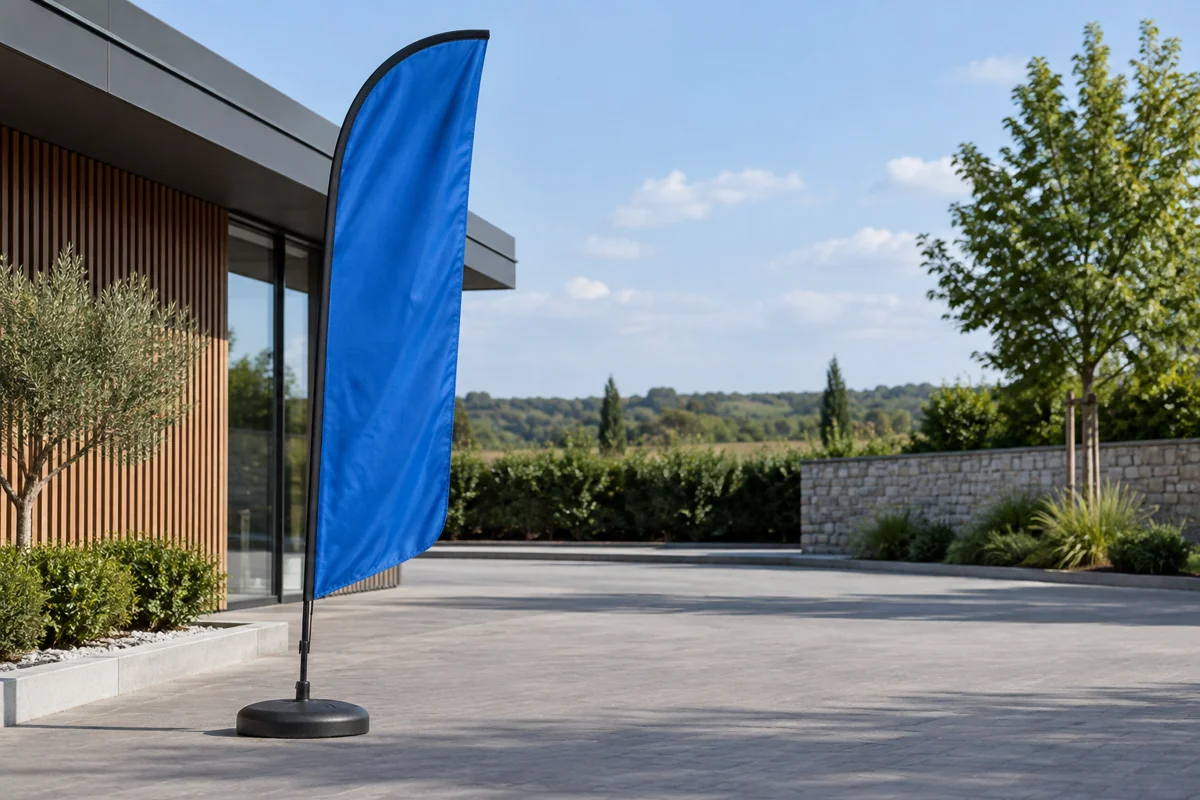
An outdoor flag quotation often begins with height and artwork. For an exposed forecourt, the more important starting point is what happens when conditions change. Who decides to remove the display, which documented limit applies, and can staff follow the removal procedure safely?
Buying the tallest flag in a catalogue does not answer those questions. Nor does adding an unspecified weight to a base. A useful feather flag brief treats the fabric, pole, base and operating routine as one system, then asks the supplier to confirm whether that system fits the site.
Describe the location before selecting hardware
Send photographs of the intended position, its surface and the surrounding area. Mark pedestrian routes, vehicle entrances, overhead obstructions and the property boundary. Explain whether the display will be attended during opening hours or expected to remain outside when nobody is available to check it.
The phrase "outside our shop" leaves too much unknown. A recessed entrance and an open roadside forecourt can present different conditions. Nearby buildings may also alter local airflow, so do not assume a wall automatically provides reliable shelter or that a familiar prevailing wind tells the whole story.
Have placement reviewed by the property manager and the relevant competent parties. Permission to occupy a shop unit should not be treated as permission to put advertising on any nearby verge or pavement. Keep the flag within the location actually agreed for the display.
Ask what the wind figure describes
A supplier should connect any published wind limit to an identifiable product and configuration. Ask for the manufacturer, model, flag size, fabric format, pole and base covered by the documentation. A headline number copied from another product is not evidence for the kit in your quotation.
Ask whether the stated figure concerns a specific test condition or an operating instruction, and request the original document. Do not convert an ambiguous specification into a promise that the display can remain outside through every gust below that number. Where the wording is unclear, obtain clarification from the manufacturer or supplier.
Manufacturer ranges themselves illustrate the need for specificity. Ultima Displays lists distinct flag systems and base categories, rather than one universal flag assembly. The exact combination needs to be identified before a performance statement can be attached to it.
If the supplier cannot provide an applicable limit and operating guidance, record that as an unresolved specification. The response should be to seek a suitable documented system or a different display approach, not to invent a conservative-looking limit yourself.
Keep artwork format inside the specification
Confirm whether the proposed flag is single-reverse or double-sided, and how that option is constructed. These choices affect appearance and may affect which product instructions apply. Do not assume that a wind figure for one construction automatically transfers to another.
A single-reverse print can show a reversed version of the message through the material. If customers approach from both directions, ask to view a physical example before accepting it. A double-sided product may solve that reading problem, but its own compatible hardware and instructions still need to be confirmed.
Avoid a blanket claim that a second printed layer doubles the wind load or halves the permitted speed. Those are engineering conclusions that cannot be derived from the description alone. The purchasing question is simpler: does the manufacturer's evidence cover the configuration being supplied?
Select the base without improvising ballast
Ask the supplier to specify a compatible base for the actual surface and site use. The written proposal should identify any manufacturer-required ballast and assembly conditions. Keep the stated requirements intact; substituting a familiar-looking base can change the system being evaluated.
Do not decide that soft ground makes a spike suitable. Ground condition, buried services, permission to penetrate the surface and the product's intended use all need consideration. Equally, a hard surface does not automatically make every weighted base appropriate for the location.
Adding loose plates, tying the pole to nearby furniture or stacking improvised weights can introduce new hazards. If the proposed configuration is inadequate, return the problem to the responsible supplier. An improvised modification is not a documented upgrade to the flag's performance.
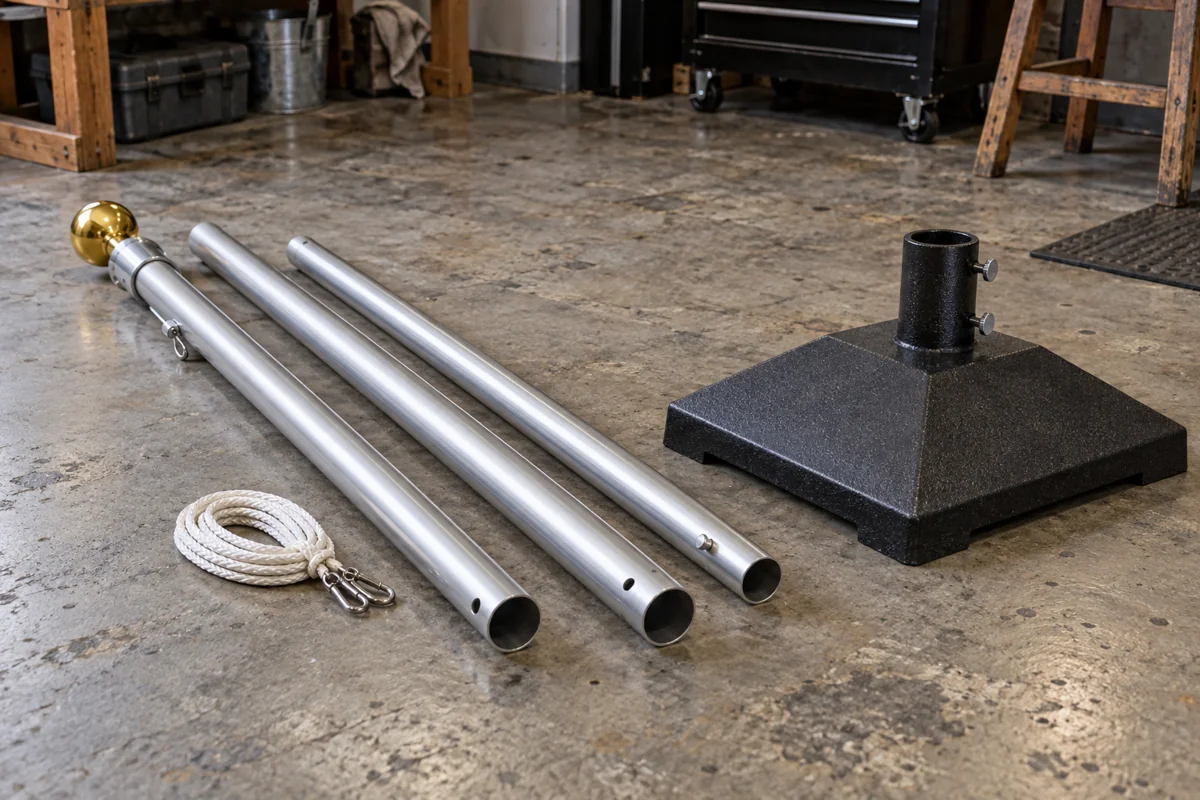
Check the space around the moving display
A flag occupies more than the footprint of its base. Ask the supplier and site manager to account for movement and clearance when reviewing the position. Consider doors opening nearby, passing trolleys, parked vehicles and pedestrians who may not notice a low base.
For several flags, review the row as a whole. A layout that looks orderly in a plan may place moving fabric close to neighbouring displays. Avoid prescribing a universal spacing distance; the actual products, movement and available area should guide the site assessment.
Keep access and visibility needs ahead of the desire to move the display closer to passing traffic. A flag should not obstruct an entrance or create a confusing roadside object. If a useful and appropriate position is unavailable, a different advertising format may be the better purchase.
Write the removal routine before delivery
Assign a person responsible for checking the manufacturer's operating conditions and the site's weather information. Identify who can authorise removal and who is trained to carry it out. A procedure that requires someone who is rarely present will not work reliably.
Agree where the removed display will be stored and how the components will be handled. Staff should receive the manufacturer's assembly and handling instructions, with any tasks beyond their competence assigned to the supplier. Do not wait for deteriorating conditions to discover that the storage room cannot accommodate the pole sections.
Ask what happens outside opening hours. If the business cannot monitor or respond to changing conditions, include that constraint in product selection. The supplier should understand the intended operating pattern rather than assume an attended event display and quote for a permanent unattended installation.
Inspect condition without predicting a lifespan
Request the manufacturer's inspection and maintenance guidance. Staff can then report visible concerns such as damaged fabric, missing components or changes in the assembly to the responsible supplier. A display with an unresolved defect should not be treated as serviceable merely because it has not fallen over.
Keep a record of the supplied model and replacement part references. A replacement print should fit the specified system, and a replacement pole should not be selected only because its diameter looks similar. Product identification makes later maintenance less dependent on a salesperson's memory.
Avoid promising that heavier fabric or a particular pole material will last a fixed number of months. Exposure, construction, handling and operating conditions differ. Ask what the actual warranty covers and which wear items or circumstances are excluded, then budget for replacements without presenting that budget as a lifespan guarantee.
Keep the display message realistic
A safety-conscious placement can leave less display area than the original marketing sketch assumed. Recheck the artwork at the agreed position before printing. If a long offer becomes unreadable, shorten the message rather than moving the flag into an unsuitable location to make it more prominent.
Ask to see the correct artwork template for the selected flag size and shape. Keep important information within the supplier's usable area and account for the way the material moves. The decision about readable content should follow the confirmed product choice, so artwork approval does not commit the buyer to hardware that has not passed the site review.
Compare a complete operating package
For a hypothetical car showroom, three flags are proposed beside a private entrance. The first quote supplies prints and poles but leaves the bases unspecified. The second identifies compatible bases, documents the permitted configuration and includes a handover explaining removal and storage. The lower headline price is not yet a comparable offer.
Ask both suppliers to price the same documented scope, including delivery, any site assessment, instructions and replacement availability. If the location cannot support the proposed display under the intended operating pattern, revise the brief before artwork is printed.
An Auronix feather flag enquiry can start with those site photographs, opening hours and display expectations. Coordinating the right package means resolving the practical questions alongside the visual design, so the buyer knows what is supplied and how it is intended to be used.
FAQs
What wind speed is safe for every feather flag?
There is no universal figure to apply across products. Obtain the documented operating guidance for the exact flag, pole, base and configuration, and resolve unclear wording with the responsible supplier.
Is a double-sided flag automatically unsuitable outdoors?
No. Suitability depends on the particular product system and its documented conditions. Ask for evidence covering the double-sided version rather than applying a rating taken from a different fabric arrangement.
Can extra weight make any base suitable?
No such assumption should be made. Use the manufacturer's compatible configuration and instructions; improvised ballast can introduce hazards and does not establish a new verified operating limit for the assembly.
What photographs help a supplier assess the brief?
Provide wide views showing the intended location, ground surface, entrances, property boundary and nearby movement routes. Include any constraints on storage, attendance or access that affect daily operation.
Can I install a spike in a landscaped area?
Do not assume that visible soil makes penetration acceptable. Obtain the necessary property permission and competent assessment of the location, including buried-service concerns and compatibility with the proposed display system.
Should flags stay outside overnight?
Tell the supplier whether the site will be unattended and whether anyone can respond to changing conditions. The operating plan must follow the specific system's guidance and account for that practical limitation.
Does a heavier fabric always last longer?
Weight alone does not establish service life or suitability. Request the actual fabric specification, compatible hardware, maintenance instructions and warranty terms rather than ranking products solely by grams per square metre.
How should several flags be spaced?
Have the actual layout reviewed for movement and clearance around pedestrians, vehicles and neighbouring displays. A generic spacing number cannot account for every flag size, product configuration and site condition.
What should happen when fabric or hardware is damaged?
Follow the product's inspection and withdrawal guidance and report the issue to the responsible supplier. Do not continue using a questionable assembly simply because its appearance remains acceptable from the road.
What belongs in the handover package?
Request the product identifiers, supplied configuration, operating limits, assembly and removal instructions, maintenance guidance and replacement contacts. Assign a site contact who understands where those records are kept and when to act.
