Advertising & Branding /
Partial Wrap or Full Wrap: Where the Extra Cost Stops Paying Off
A practical business case for deciding whether extra vehicle-wrap coverage earns its place in the quotation.
By Auronix Advertising
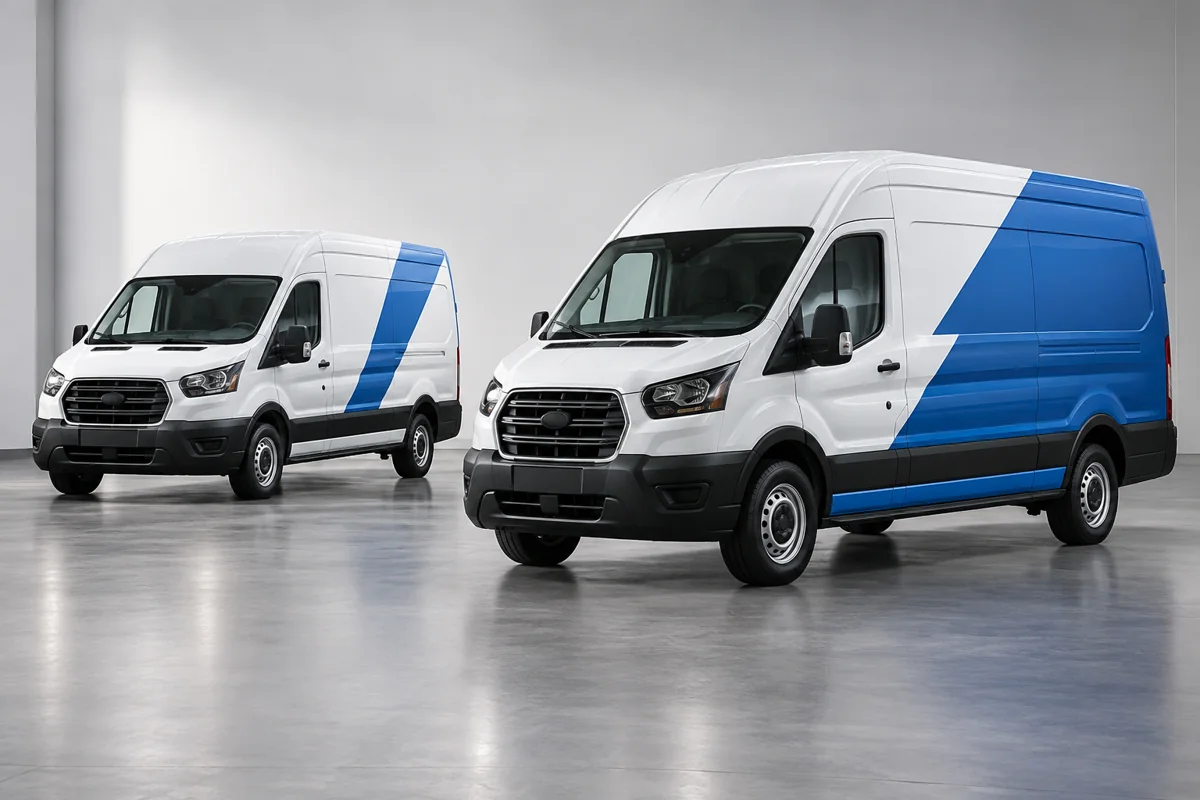
The full-wrap quotation costs more, but the rendering also looks more finished. That can make the upgrade feel obvious before anyone has asked what the extra coverage contributes. For a working vehicle, the right question is which additional surfaces improve recognition enough to justify their complete cost.
There is no reliable universal point where a full wrap stops paying off. Routes, vehicle shapes, parking patterns and business needs differ. You can still make a disciplined decision by comparing two designs for the same vehicle and identifying what changes when coverage increases.
Start with the vehicle's real working week
Write down where the vehicle spends its time. A delivery van may spend much of the day with its rear facing an access lane. A service car may sit in customer parking spaces where one side is visible. A vehicle kept inside a warehouse between short trips presents a different advertising opportunity.
Ask drivers for ordinary observations, not estimated audience numbers. Which side do customers approach? Are doors usually open while the vehicle is parked? Do loading equipment or body attachments hide parts of the proposed graphic? These details help identify useful panels without pretending to measure impressions.
Separate identification from promotion. The business may need customers to recognise an arriving vehicle, while the marketing team wants to advertise several services. Decide which outcome has priority so the design is not forced to carry every message in the same small area.
Price two versions of one brief
Ask for a partial-wrap concept and a full-wrap concept using the same essential name, colours and approved wording. Keep the vehicle model and material quality assumptions consistent. Otherwise a comparison can accidentally give one option better artwork or a more suitable film and attribute the difference to coverage.
Have each supplier mark the included panels on the proof. "Partial wrap" can describe very different amounts of work, while "full wrap" may still exclude particular areas. The drawing should make those boundaries clear, including how the original body colour remains visible.
Request the complete price difference with preparation, installation, any required permit work and agreed handover included. Identify exclusions rather than estimating them from a marketing package name. The relevant number is the additional spend for the exact upgrade being considered.
Ask what each extra panel does
Review the proposed expansion panel by panel. Does it make the business name easier to recognise from an important direction? Does it resolve an awkward colour transition? Does it create a coherent identity across vehicles with different original colours? Write the reason beside the added area.
An area with no clear communication or appearance benefit is a candidate for removal from the scope. That does not mean every surface needs to generate a directly measurable sale. Consistency and presentation can matter, but the buyer should be able to explain which benefit is being purchased.
Do not turn square metres into exposure or revenue with a fixed multiplier. More covered area does not automatically mean more people see the vehicle, understand the message or contact the business. Those outcomes depend on circumstances that a fabrication quote does not measure.
Make the existing paint part of the design
A partial wrap deliberately uses the vehicle's original colour as part of the composition. Ask the designer to show transitions and empty areas clearly. A well-considered partial layout can look intentional; a shortened full-wrap design may look unfinished because its visual structure depended on covering the entire body.
Check the same idea across fleet colours. White, dark grey and silver vehicles may need different contrast treatment even when the logo remains identical. A full wrap might simplify the external colour identity, but it adds work that should be assessed against the actual fleet mix.
Have the installer assess paint condition before either choice is released. Existing repairs or surface problems can affect the proposed application and later removal. Neither coverage option should be sold as a guaranteed way to hide defects or protect resale value.
Include time away from work
Ask for realistic scheduling assumptions for each option. Preparation, application and the supplier's handover requirements can affect when the vehicle returns to service. Do not assume that twice the covered area means exactly twice the downtime; request a programme for the specific vehicle and system.
For several vehicles, compare a staged rollout with a single booking. The business may need a minimum number available every day. A lower installation price is less attractive if the proposed schedule leaves the team unable to make planned deliveries or visits.
Treat the value of downtime as your own operational calculation. If the business has a spare van, the impact may differ from hiring a replacement vehicle. Use actual internal costs where available, and keep estimates labelled rather than presenting an invented industry average.
Think about the next change
Consider how long the contact details, service description and visual identity are likely to remain stable. If a telephone number or offer changes frequently, discuss a layout that does not make every update a replacement of the entire composition.
Ask what happens after a damaged door or body repair. The answer depends on the artwork and material arrangement, not simply whether the original job was called partial or full. Request identifiable production files and product records so replacement work can be assessed accurately.
Also discuss eventual removal at the quotation stage. The scope should say whether removal is included, separately available or outside the order. A promise that any wrap will peel away without residue or paint damage would ignore the particular surface, material and service history.
Keep the permit comparison current
Dubai's Mada Media vehicle advertising page distinguishes complete and partial wrap categories and publishes associated conditions. That is a reason to check the actual proposed coverage and vehicle classification through the current process, rather than assuming both concepts create an identical approval scope.
Have the responsible applicant confirm which category applies and whether changes to the vehicle's appearance raise additional requirements. Do not use a supplier's casual description of "just a few stickers" as evidence that no review is needed.
Keep the approved artwork tied to the production proof. If the final commercial decision removes or adds panels after review, ask whether the changed proposal needs to be reconsidered before installation. Cost control should not create a mismatch between the submitted and installed designs.
Separate tracking from attribution claims
If the business wants to learn whether vehicle branding contributes to enquiries, agree a simple question for the sales team: how did the customer hear about the company? Record answers consistently without treating every vague recollection as proof that a particular wrap panel caused the enquiry.
Use that information alongside practical observations from drivers and customers. A person may notice a vehicle and later search for the business by name, so a single direct-response count cannot describe the whole effect. Equally, a busy phone line after installation does not establish that broader coverage created the increase.
This evidence can inform the next fleet refresh. Keep the comparison honest by recording other changes, such as a promotion or new operating area, that happened during the same period. The objective is better purchasing judgment over time, not a precise return figure manufactured from incomplete data.
Decide with a small, honest business case
Consider a hypothetical maintenance company with similar white vans. Its customers mostly see the side and rear while vehicles are parked at appointments. A partial design might satisfy identification from those positions, leaving the full-wrap upgrade mainly responsible for a different aesthetic rather than an additional communication task.
Another company may operate vehicles in several colours and need a uniform appearance at public events. Here, broader coverage could answer a clearly stated presentation requirement. The purchasing argument is stronger because it names the problem solved, without promising a percentage increase in enquiries.
Record the chosen coverage, the extra benefits accepted or declined and the operational assumptions behind the decision. If useful, trial one approved vehicle before committing the entire fleet. An Auronix partial-wrap and decal brief can compare coordinated options around these facts instead of treating maximum coverage as the default.
FAQs
Is a partial wrap always the better value?
No. It can be appropriate when selected panels meet the identification need, but a full wrap may solve a different fleet-consistency or presentation problem. Compare the actual additional benefit against the complete extra cost.
Can a full wrap guarantee more enquiries?
No wrap format guarantees enquiries. Coverage is only one part of communication, and a fabrication quotation does not measure audience exposure, customer understanding or the business's eventual conversion performance.
What should a partial-wrap quotation show?
Request a vehicle-specific proof marking every included panel, the visible original body colour and any exclusions. The written material and installation scope should match that drawing so coverage is unambiguous.
How should different fleet colours be handled?
Review each body colour against the same identity requirements. The design may need contrast adjustments, or broader coverage may be justified where a uniform external appearance is an explicit business priority.
Is downtime proportional to the amount of vinyl?
Not necessarily. Preparation, vehicle shape, application requirements and scheduling all matter. Ask the supplier for a programme for each proposed option and calculate operational effects using your own fleet arrangements.
Will wrapping improve the vehicle's resale value?
That should not be promised from coverage alone. Existing paint condition, application, maintenance and removal history matter, and the eventual buyer's preferences are unknown when the advertising decision is made.
Should removal be discussed before ordering?
Yes. Establish who would arrange removal, whether it is included and what information the supplier needs to assess it. Avoid treating removability as a guarantee of zero residue or zero paint risk.
Do partial and full wraps follow identical permit categories?
Do not assume so. Confirm the current applicable classification for the exact vehicle and artwork with the responsible applicant, and check any changes before the installation is released.
How can a small business test the decision?
Where practical, review two realistic concepts and trial one approved vehicle before a wider rollout. Use observations about identification and daily operation instead of inventing audience or revenue figures.
What should be retained after the project?
Keep the final artwork, coverage map, material identification, relevant approvals and installation record. These make later repairs, contact-detail changes and removal discussions more precise and less dependent on memory.
