Advertising & Branding /
Frosted Glass That Gives You Privacy but Keeps the Daylight
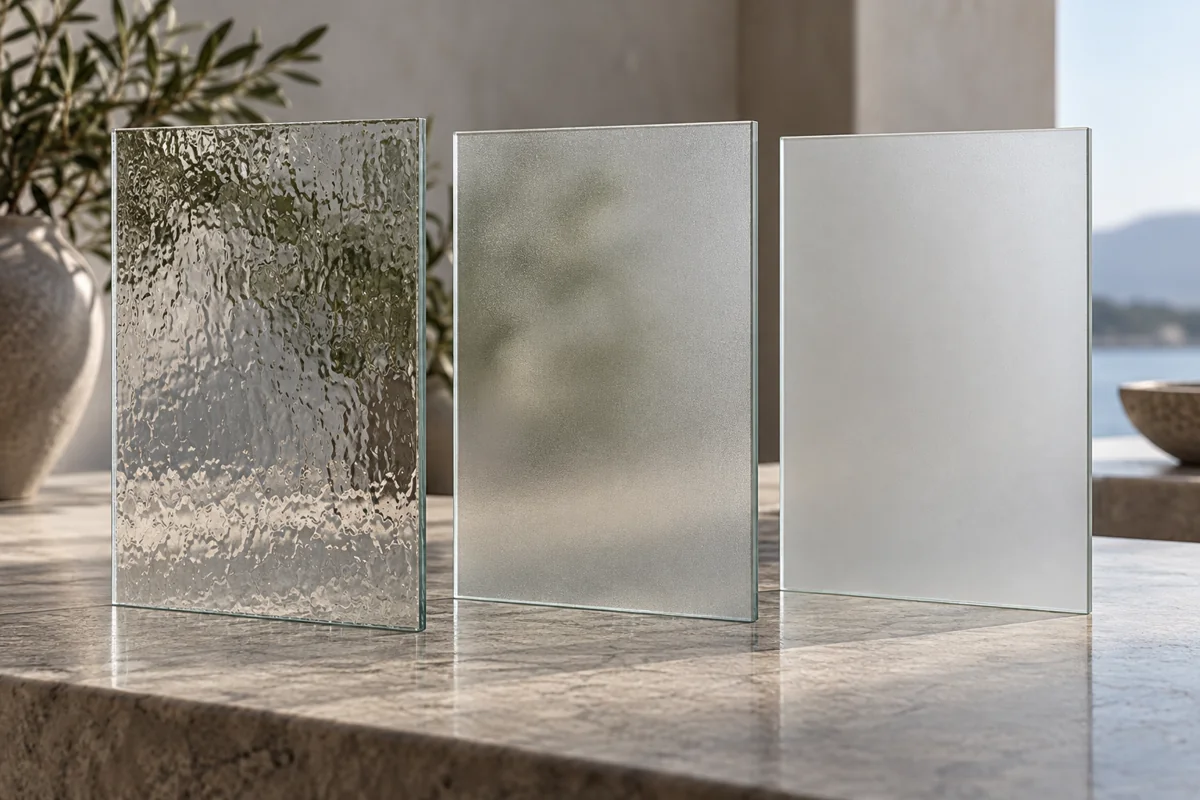
Choose a frosting pattern by testing the views into a working room, not by selecting a swatch that merely looks opaque on a desk.
By Auronix Advertising
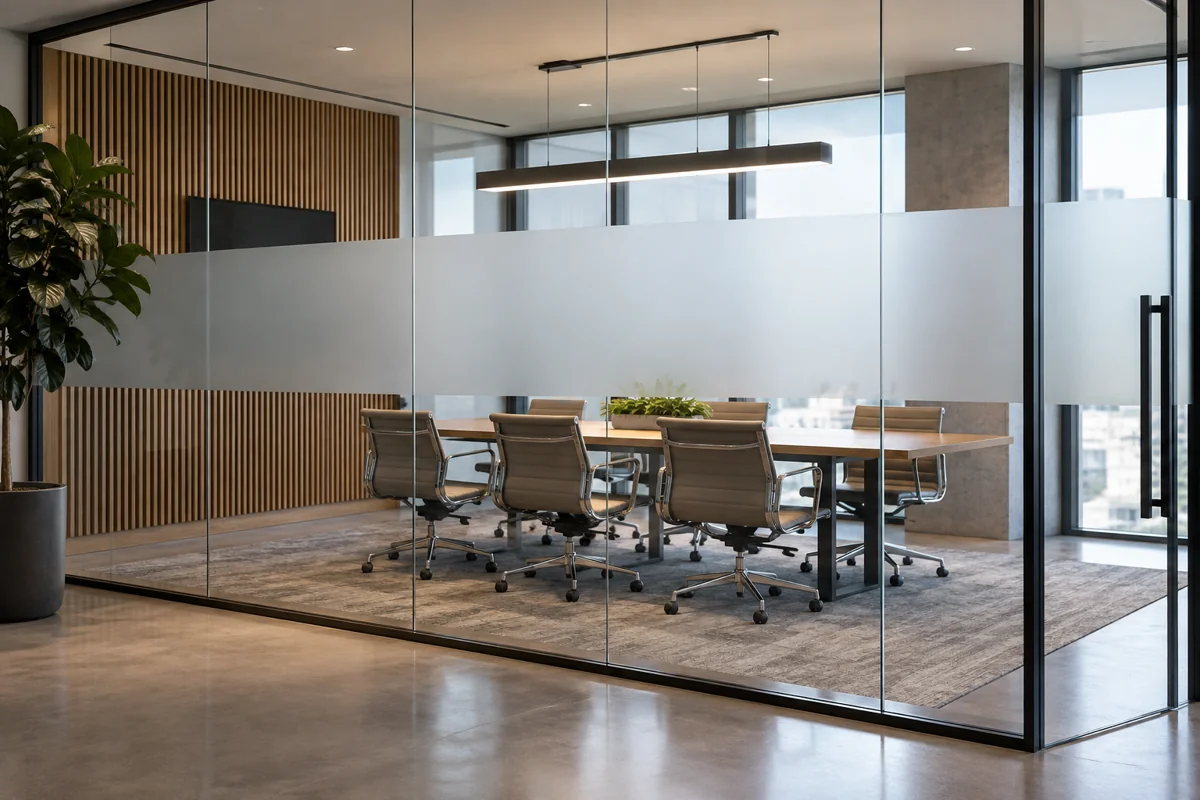
The meeting room needs privacy, but the corridor relies on daylight passing through its glass wall. Covering the entire partition with the densest-looking film may solve one concern while creating an unnecessarily closed feeling. A decorative stripe may look lighter and still leave the actual conversation area exposed.
Start with the views that matter. Who needs to be screened, from which direction, and under which lighting conditions? An office glass-frosting brief becomes much clearer when it describes those situations instead of asking for a percentage of privacy that nobody has defined.
Decide what privacy means in this room
Different rooms have different needs. A casual meeting room may only need to reduce distractions from the corridor. A room used for confidential discussions may need a more demanding visual assessment, while sensitive information may require measures beyond decorative glass film.
List what should be difficult to see: seated faces, paperwork, a presentation screen or activity across the whole room. Do not treat these as equivalent. A design can obscure people at the table while leaving a wall-mounted screen visible through a clear section above the frosting.
Also distinguish visual screening from acoustic privacy. A frosted appearance should not be presented as evidence that a conversation cannot be heard. If sound privacy is part of the brief, have that assessed separately by the appropriate building professional.
Map the occupied sightlines
Review the room with its intended furniture layout in place or accurately marked. Look from the corridor, reception desk and other ordinary approach positions. Include seated viewpoints where relevant, rather than judging everything from the eye level of a person standing beside the glass.
Mark the zones where an unobstructed view creates a problem. This exercise can reveal why a standard decorative band is too low, too narrow or interrupted in the wrong place. It can also show where clear glass could remain without undermining the stated privacy purpose.
Repeat the review with doors in their ordinary positions. A carefully screened fixed panel may be irrelevant while an adjacent door stands open. Decide whether the room's operating habits need to change or whether the design should accommodate them; film alone cannot correct every usage conflict.
Compare products by their actual properties
Ask the supplier to identify the exact decorative film and provide its current product information. Avoid comparing two quotations that describe only "frosted vinyl" when they may refer to different materials, patterns or intended applications.
For example, 3M's FASARA gradation range includes patterns with different transitions between transparency and opacity. That shows why a product family name alone does not specify the visual result. The particular design and its position on the glass matter.
Do not convert a visible-light-transmission figure into a guarantee that faces or documents cannot be recognised. Light transmission describes one property; your room's privacy requirement concerns an actual view. Ask for samples and test the intended use rather than inferring the complete outcome from a single number.
Confirm suitability for the glass and its location with the supplier. Existing coatings, glazing arrangements and exposure may need professional review. A decorative film selected for an internal partition should not automatically be substituted onto another glazing application without checking the relevant product guidance.
Mock up coverage before ordering every panel
Arrange a representative sample area or another suitable mock-up with the installer. It should show enough of the pattern to assess the intended screening, not just a small corner. The installation and later removal of any sample should follow the supplier's appropriate method.
Test the room under the lighting conditions it will actually experience. Compare a bright corridor with a dimmer room, and the ordinary evening arrangement with the internal lights on. Look at the target objects and activities instead of asking only whether the glass looks attractively frosted.
If the brief concerns screens or documents, use harmless sample content for the review. Do not expose real confidential material while checking visibility. Record whether the sample arrangement satisfies the practical requirement and which views remain unresolved.
Keep daylight questions separate from appearance
A room can feel open while a chosen pattern still blocks an important view, or feel enclosed despite admitting substantial light. Ask occupants to review both comfort and privacy rather than assuming that one automatically measures the other.
Where daylight performance is a significant design requirement, involve the appropriate lighting or building specialist. The film supplier can provide product data, but a small decorative sample does not establish how the whole office will perform under changing daylight conditions.
Consider whether selective coverage answers the brief. A clear upper zone, a different gradation or revised furniture position may reduce unnecessary coverage. These are options to test, not universal recommendations; the selected arrangement still has to protect the views identified at the start.
Avoid decorative gaps that defeat the purpose
Cut-out logos and stripes can make a partition look distinctive, but every clear area deserves review. A gap positioned at the seated sightline may expose precisely the activity the frosting was meant to screen. View the pattern from both sides before approving its visual rhythm.
Use a drawing that shows the pattern in relation to doors, handles, mullions and furniture. Repeating the same strip height across a photograph may conceal differences between individual panels. The production artwork should fit the measured glass layout, not a generic office-partition illustration.
Keep any applicable glass visibility or building requirements separate from the branding decision. Decorative frosting should not be assumed to satisfy every obligation concerning glass marking or safety. Ask the responsible building professional to review those matters where relevant.
Make installation and handover manageable
Ask the supplier which site conditions it needs and how the room will be affected during the work. Coordinate access with meetings and cleaning rather than scheduling installation into a space that staff expect to use continuously. Clarify any supplier instructions for the period immediately after application.
At handover, inspect the actual panel layout against the approved drawing. Check pattern alignment, clear areas and the intended sightlines. A neat installation can still fail the brief if the privacy band was positioned against the wrong furniture arrangement.
Obtain cleaning instructions for the supplied film and give them to the facilities team. Keep the product and pattern references for future replacements. If a panel is changed later, the replacement should be evaluated against the established privacy purpose rather than chosen solely for a similar colour.
Document the limits of the accepted arrangement
Write down any remaining clear views and the reason they are acceptable. This helps a later facilities manager understand that the treatment was selected for a particular room use, rather than assume that every frosted partition offers the same privacy.
If the room changes from casual meetings to confidential interviews, revisit the original assessment. Moving a table or adding a larger screen can put sensitive activity in a previously harmless clear zone. The product may be unchanged while the privacy requirement has materially changed.
Include this review in ordinary office alterations. It is easier to reconsider a screen position while furniture is being planned than after new glass graphics have been ordered to fit an obsolete layout. Keep the original sightline photographs available so the team can see which assumptions no longer hold.
Write a brief the supplier can evaluate
Imagine a hypothetical office where corridor movement distracts staff during video meetings. Testing may show that a central band reduces distraction while leaving an upper daylight zone open. That conclusion belongs to this room and its viewpoints; it is not a standard height to copy into every office.
A different room used for confidential document review may need a different treatment or additional operational controls. The important result is an explicit decision about what the chosen film does and what remains outside its scope.
For Auronix glass frosting and vinyl graphics, share photographs, a measured panel layout and a description of the privacy problem. Coordinated fulfilment can then start with a meaningful sample review, so the finished partition is selected for the way people actually use the space.
FAQs
Does frosted glass film guarantee complete privacy?
No blanket guarantee should be inferred from its appearance. Test the actual product and coverage against the specific views, lighting conditions and activities that the room needs to screen.
Will a light-transmission figure tell me whether faces are hidden?
It describes a material property, not the complete privacy outcome. Faces, documents and screens should be assessed in a representative room arrangement using the proposed product and coverage pattern.
Is a central privacy band suitable for every office?
No. Its usefulness depends on furniture, seated and standing viewpoints, screen positions and door arrangements. Map the relevant sightlines before deciding the height or extent of the treatment.
Can decorative film provide sound privacy?
Do not treat a frosted visual finish as acoustic evidence. If conversations must be protected from being overheard, include a separate assessment by the appropriate building or acoustic professional.
Why test the film after dark?
The relationship between corridor and room lighting may change during evening use. Review the actual intended conditions so a daytime sample approval does not leave an important operating scenario untested.
Should logos be cut out of the frosted area?
They can be considered as part of the design, but clear gaps need a privacy review. Check whether each opening exposes a relevant seated view, document area or screen before approving it.
Does frosting automatically meet glass-marking requirements?
Do not assume that decorative coverage satisfies every applicable building requirement. Ask the responsible professional to review visibility marking and related obligations separately from the branding and privacy brief.
What information should accompany the first enquiry?
Provide glass-panel dimensions, room photographs, furniture and screen positions, plus a clear description of what should be screened. Mention changes planned for the lighting or layout before samples are selected.
How should the finished installation be reviewed?
Compare the panel arrangement with the approved drawing, then repeat the agreed sightline checks. Neat edges alone do not establish that the film is positioned correctly for the room's privacy purpose.
What should facilities staff receive at handover?
Keep the film and pattern identification, final layout and supplier care instructions available to facilities staff. Those records support appropriate cleaning and a meaningful match when a panel later needs replacement.
