Advertising & Branding /
Portable Exhibition Stands: Check Packed Size and Setup Requirements
A stand that fits into two cases still needs to fit your transport plan, venue rules and team's ability to unpack and rebuild it.
By Auronix Advertising
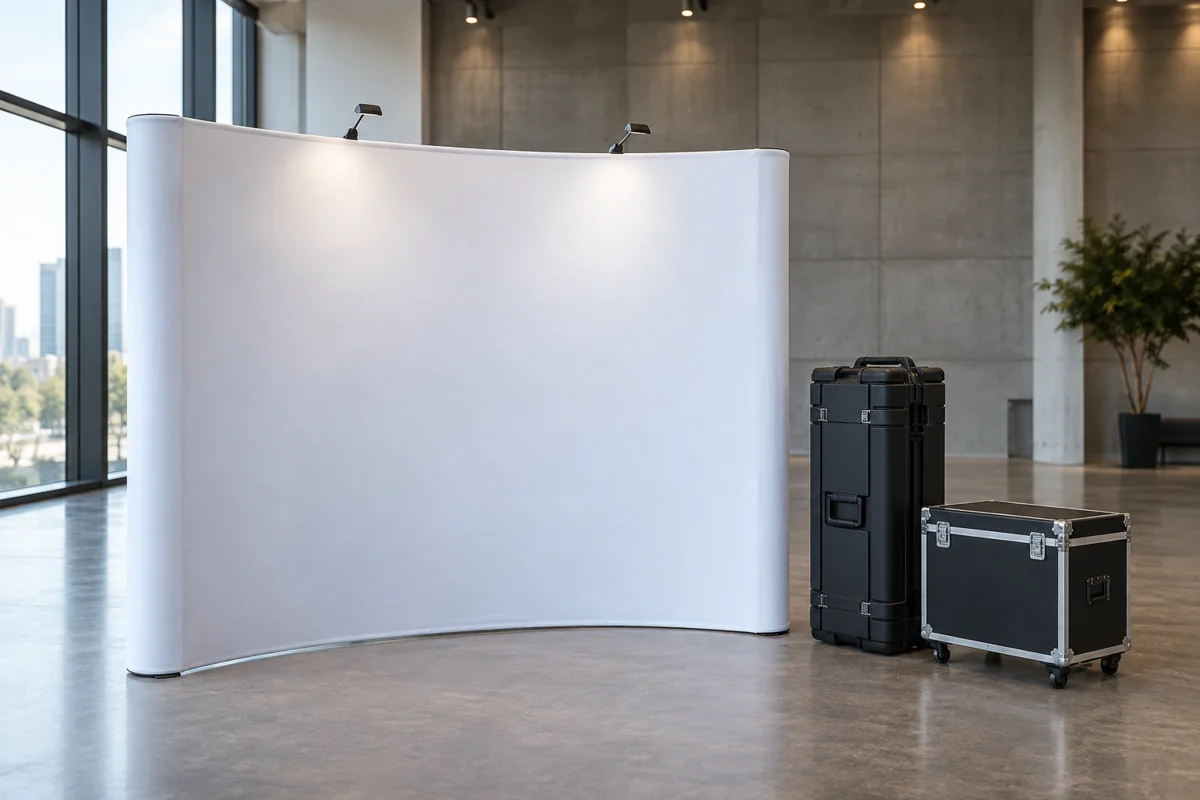
"Fits into two cases" sounds like a complete transport plan until the cases reach the airport, loading bay or office staircase. The number of cases says little about their packed weight, outside dimensions or the other equipment the team still needs to carry.
For a portable exhibition stand, evaluate the journey in both directions. It must travel to the venue, be assembled within the available arrangements, perform its display job and return in a condition that allows the next event to happen without replacing missing components.
Define the event kit before counting cases
List everything the team expects at the stand: the display structure, graphics, counter, lighting, literature holders, screens and any demonstration items. Identify which pieces are included in the portable-system quotation and which travel separately.
A supplier may accurately describe the backwall as two cases while the business imagines the entire event presence inside them. Resolve that difference with a complete inventory. Otherwise, transport savings can disappear when an additional counter, screen and stock of printed material are added later.
Record what is essential and what is optional. A smaller set of useful components can be easier to deploy than a visually impressive package that the team cannot transport or operate. Make those choices around the event's customer interaction, not around filling the largest available floor area.
Ask for packed dimensions and gross weight
Request the outside dimensions of each packed case, including handles, wheels and protrusions. Ask for the actual gross weight with its assigned contents, not the empty-case weight or a figure for the aluminium frame alone.
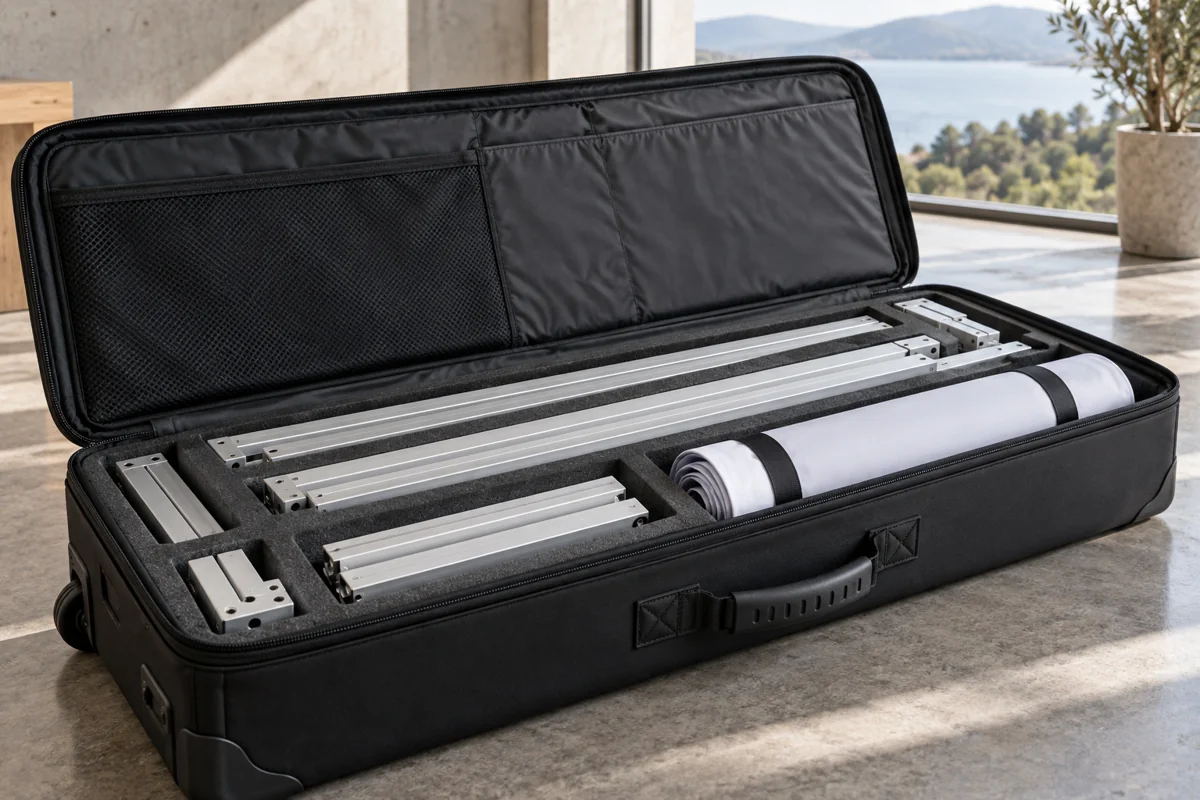
Have the supplier identify what is inside each case. If the graphic, lighting or connectors are shown separately in a demonstration, confirm where they will go during travel. A packing photograph is useful because it turns an abstract claim into a repeatable arrangement.
Keep a small allowance for items that may be added later, but do not assume an airline or carrier will overlook an excess. The transport plan should work within the current rules for the actual booking and shipment rather than depend on discretion at the counter.
Check the whole transport route
For flights, consult the operating carrier and the booked itinerary. Emirates explains that checked-baggage allowances can follow weight or piece concepts and that dimensional conditions apply. A case described as airline-friendly by a display supplier is therefore not proof of acceptance on every ticket.
Check connecting services and any separate transport legs. The exhibition kit may fit the airline allowance yet be awkward for the vehicle collecting the team at the destination. Confirm luggage space, lifting assistance and the route from the unloading point to the stand.
If the display travels as cargo or through an event logistics provider, obtain its requirements and deadlines directly. Do not assume accompanied baggage avoids customs or venue processes. The relevant carrier, organiser or adviser should confirm what documentation applies to the actual movement.
Rehearse with the people who will use it
Arrange a complete assembly demonstration before the first event. If the team's plan is to assemble the permitted portable system themselves, the intended users should practise with the supplied instructions under appropriate conditions. A supplier's experienced demonstration is useful, but it may not represent a first-time team.
Time the full process from closed cases to an event-ready display, including identifying parts and fitting graphics. Record any task that requires supplier support or specialist services. Do not pressure staff to perform electrical, rigging or structural work outside their competence or the venue's rules.
Ask what tools, consumables and spares are actually needed. Keep them on the packing inventory and confirm their transport arrangements. A design described as tool-free may still involve other event tasks that need equipment or authorised venue support.
Check the display inside its booked footprint
Use the event's confirmed stand dimensions and current exhibitor information. Review the structure, any projecting feet, counter and customer circulation together. A nominal backwall width does not necessarily describe the full space occupied by the complete arrangement.
Ask the organiser which submissions, material documents or contractor arrangements apply. Portability is a transport characteristic, not an exemption from venue requirements. Resolve power, overhead elements and any specialist work with the venue and responsible professionals before arrival.
Test the graphic at ordinary viewing positions. A lightweight stand still needs a readable message and a useful conversation area. Do not sacrifice the event's purpose simply to achieve a smaller case count; sometimes a simpler graphic or a different component arrangement is the better compromise.
Make graphics replaceable in a controlled way
If the hardware will be reused, request the exact artwork templates and component references. A future designer needs the correct dimensions and production requirements, not just a photograph of the previous stand. Confirm who retains the final files and how replacement graphics are ordered.
Ask whether the proposed system can support the next known event layout without additional hardware. Keep this tied to real planned use. Buying a large collection of speculative connectors or extensions can undermine the simplicity that made a portable system attractive.
Review how graphics should be packed and stored using the supplier's instructions. Different materials and constructions may have different handling requirements. Do not assume that a fabric print can be folded arbitrarily or that a rigid panel will fit safely between frame components.
Rehearse packing, not just assembly
At the end of the demonstration, ask the team to return every item to its assigned place. Photograph the completed packing arrangement and keep a numbered inventory. This is often when the difference between a neat sales demonstration and a repeatable travel system becomes visible.
Check what happens when the team is tired and the hall has a strict dismantling window. A clear order for packing and a simple missing-part check can reduce confusion. The procedure should follow the supplied handling guidance and the organiser's permitted dismantling times.
Include a return inspection. Damaged connectors, missing feet or marked graphics should be reported while there is time to resolve them before the next booking. Storing the cases unopened until the following show merely moves the discovery of a problem to a more expensive moment.
Check the route inside your own building
The first transport constraint may be the office, not the airport. Confirm that the packed cases can move through the storage-room door, lift and loading area using appropriate handling arrangements. A case that fits a van can still be awkward to retrieve from an upstairs cupboard.
Name the person who checks the kit before departure and give them access to the cases in time. An inventory is only useful if someone can open and inspect the shipment before the courier arrives. Keep responsibility separate from the salesperson who happens to be attending the event.
For repeat shows, record the problems that actually occurred: a confusing connector label, an omitted graphic or insufficient collection time. Correct those specific issues rather than adding more accessories and instructions that make the next trip harder to manage.
Compare cost per planned use honestly
List the purchase price, replacement graphics, transport, storage and any required event services for the shows already planned. Do not divide the price by an imagined number of future events to make the unit cost look attractive.
A hypothetical consultancy attending three regional events may find that one compact backwall and a separate locally sourced counter work better than a larger all-in-one package. Another exhibitor may need a more substantial structure because product demonstrations require additional space and professional setup.
Neither choice is inherently more professional. The better system is the one that supports the event interaction and can be transported, assembled and packed under the actual constraints. Keep the accepted inventory and rehearsal record with the order so the delivered kit matches the reviewed plan.
For Auronix exhibition stands and kiosks, share the booked footprint, journey details and team arrangements. Coordinated fulfilment can then compare a portable package against the real event requirements, with the case count treated as one useful detail rather than the entire buying decision.
FAQs
Does a two-case stand automatically qualify as checked baggage?
No. Acceptance depends on the packed dimensions and weight, the actual airline booking and the applicable route rules. Verify those conditions with the operating carrier before relying on a supplier's travel description.
Which weight should I request from the supplier?
Ask for the gross packed weight of each case with its assigned contents. Empty-case weight or a frame-only figure does not describe the load that will reach the carrier or venue.
Should the team practise setting up the stand?
Yes, where the intended tasks are permitted and within their competence. Use the supplied instructions, identify specialist tasks separately and time the complete process rather than only unfolding the frame.
Can a portable stand bypass venue approval requirements?
Do not assume so. Ask the organiser which current submissions, material information and contractor arrangements apply to the actual display, including its lighting, footprint and any overhead elements.
Why is a packing rehearsal useful?
It confirms that every supplied item fits its assigned case and that the team can reproduce the arrangement. It also exposes missing protection, unclear part identification and components omitted from the transport claim.
What should an inventory include?
List the frame parts, connectors, graphics, feet, lighting and all included accessories by case. Add photographs and the supplier's handling instructions so another team member can check the kit consistently.
Can old hardware always take new graphics?
Compatibility needs confirmation for the exact system. Retain component references and production templates, then ask the supplier to verify the new graphic specification before ordering replacements for an upcoming event.
Should optional accessories be bought immediately?
Buy around known event needs rather than every possible future layout. Extra accessories add weight, storage and handling work, so each should solve a defined requirement in the planned programme.
What should happen when the cases return?
Inspect the contents against the inventory and report damage or missing parts promptly. Resolve problems before storage where possible so the next event does not begin with an unexpected incomplete kit.
How can two portable-stand quotes be compared fairly?
Use the same complete event inventory and identify transport, setup, graphics and venue-service exclusions. A lower case count or hardware price alone does not establish the lower total cost for your shows.
