Advertising & Branding /
Cut Vinyl Lettering on Textured or Painted Walls
Cut vinyl needs smooth, sound and fully cured walls. On texture or fresh paint, test first, allow paint to cure, use specialist film with trained installers or switch to painted or raised 3D lettering.
By Ashker

Cut vinyl lettering is a fast, affordable way to brand offices, clinics, cafes and shops across the UAE. On smooth, properly cured walls it can look crisp for years. On textured plaster, fresh paint or rough blockwork, letters often lift, bubble or peel within days or weeks. Knowing why helps you choose the right method before booking the installation.
This guide explains why cut vinyl fails on textured and freshly painted walls, and what to do instead. It covers realistic paint cure times, surface testing, heat application for textured film and alternatives such as paint or 3D letters. It relies on 3M's instruction bulletins for substrates and wall applications. Each section ends with a short answer for your fit-out team.
Why does cut vinyl fail on textured walls?
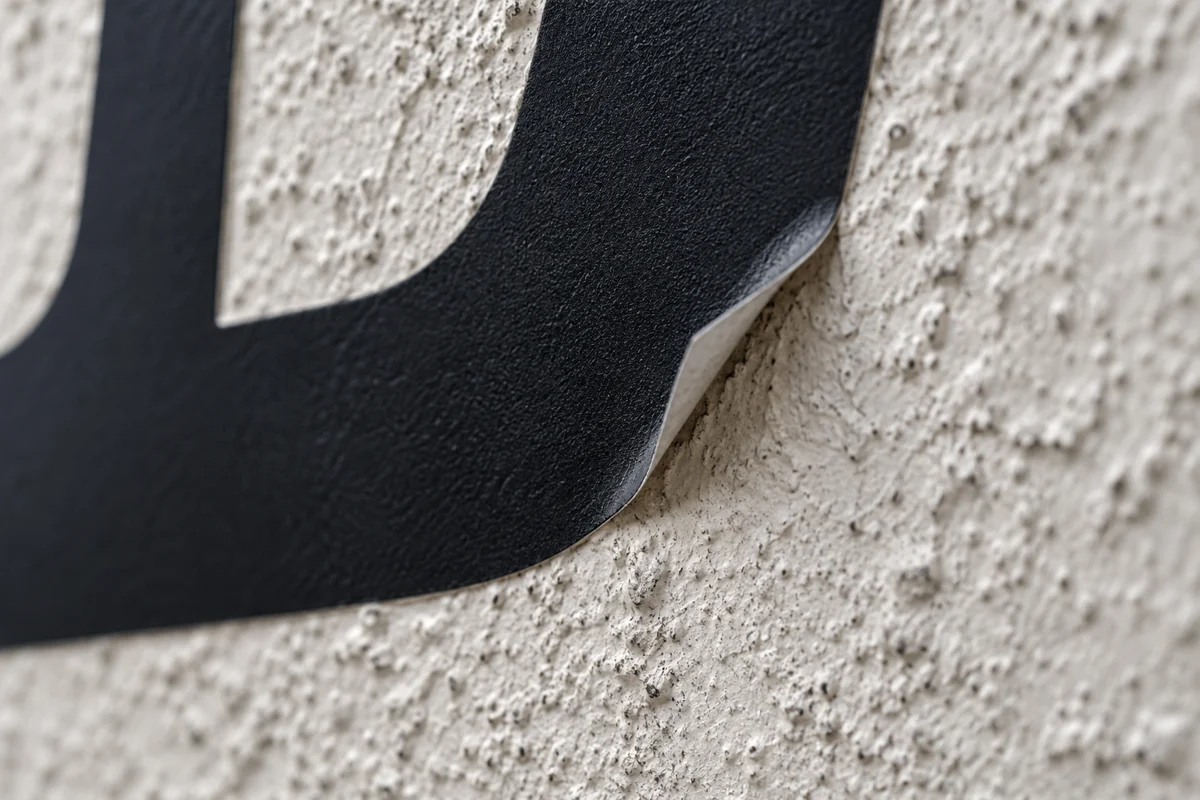
Vinyl adhesive needs close contact with the surface to bond properly. 3M's older Bulletin 5.1 noted that it is more difficult for the adhesive to make good contact with textured surfaces rougher than 150 grit sandpaper. Small cut letters have very little adhesive area to hold onto.
Air trapped in the texture lets edges lift, especially on small letters and sharp corners. Dust and loose texture also stop the adhesive bonding to the actual wall surface. The result is lettering that looks fine on day one and fails weeks later.
Quick answer: Cut Vinyl Lettering on Textured or Painted Walls
3M notes adhesive struggles to contact textured surfaces rougher than 150 grit sandpaper. Small cut letters have little adhesive area, so edges often lift and fail within days or weeks.
How long should fresh paint cure before applying vinyl?
Paint can feel dry to the touch within an hour but still be releasing solvents. 3M's current guidance says to follow the paint manufacturer's recommended cure time before applying graphics. It warns that graphics may not adhere, or edges may curl, if paint is not thoroughly cured.
Plan installation dates around the full paint schedule, not the opening date alone. If graphics must go on sooner, 3M recommends its surface-appropriate adhesion test in several places. Fit-out schedules often squeeze painting and signage into one week, so agree the order early.
Quick answer: Cut Vinyl Lettering on Textured or Painted Walls
Paint feels dry quickly but keeps releasing solvents, so 3M says to follow the paint manufacturer's cure time. If graphics must go on sooner, run 3M's surface-appropriate adhesion test first.
Can vinyl be applied to textured walls at all?
Yes, but it needs films designed for textured surfaces and very different installation methods. 3M's wall application bulletin says installing film on textured walls requires high heat, special applicator tools and unique techniques. It warns against walls with loose surfaces, such as loose sand-textured blocks.
3M also warns that insufficient heating can produce a film that looks good at first but lifts days or weeks later. Textured wall film suits large printed graphics more than fine cut lettering. Use an installer trained in that specific film system and its tools.
Quick answer: Cut Vinyl Lettering on Textured or Painted Walls
Textured walls need special films, high heat and trained installers, according to 3M's wall bulletin. Avoid walls with loose texture, and expect poor heating to cause edge lifting weeks later.
What are the best alternatives to cut vinyl?
Hand-painted or stencilled lettering follows the wall texture naturally and suits murals, cafes, receptions and feature walls. It takes longer and needs a skilled sign painter, but it does not lift like vinyl. Changing the design later means repainting the wall section and lettering.
Raised 3D letters in acrylic, metal or PVC sit off the wall on hidden studs or adhesive pads. They suit reception and lobby walls and avoid most surface texture problems entirely. Our guide to 3D signage depth and daytime lighting covers lettering depth and visibility choices.
Quick answer: Cut Vinyl Lettering on Textured or Painted Walls
Hand-painted or stencilled lettering follows texture naturally but needs repainting to change the design. Raised 3D letters suit reception and lobby walls, with mountings chosen for the surface and weight.
How should walls be tested before ordering lettering?
Ask the installer to inspect the wall and run an adhesion test before you order anything. 3M's bulletins describe separate adhesion test methods for smooth walls and textured surfaces, chosen by surface type. Test in several places, especially on recently painted or patched areas.
New concrete needs much longer, because 3M says to cure new concrete for 6 to 12 months or seal it first. Bare blockwork usually needs sealing or painting, then curing, before graphics. If the wall fails any testing, switch to paint, mounted panels or 3D letters.
Quick answer: Cut Vinyl Lettering on Textured or Painted Walls
Ask installers to always run 3M's surface-appropriate adhesion test in several different places first. New concrete needs 6 to 12 months of curing, or sealing, before graphics, according to 3M.
Takeaways: Cut Vinyl Lettering on Textured or Painted Walls
Cut vinyl struggles on texture, since 3M notes adhesive contact suffers on surfaces rougher than 150 grit sandpaper. Wait for paint to cure fully, following the paint manufacturer's own instructions, as 3M advises. Textured film needs high heat, special tools and properly trained installers. Test walls in several places first, and choose paint or 3D letters where vinyl will fail.
Fix the surface plan before the lettering plan
Most failed wall lettering is not a printing problem but a surface and timing problem. Inspect the wall, check paint dates and run adhesion tests before choosing the right method. Use cut vinyl only on smooth, sound and fully cured surfaces that pass testing. Choose textured film, paint or 3D letters instead where the wall makes vinyl unreliable.
Auronix Advertising coordinates wall graphics and murals in the UAE, including vinyl lettering, textured wall graphics and hand-painted signage. Send us photos of the wall, its size, when it was painted and your artwork. We will arrange surface tests and recommend the most reliable method for your space and budget. Request a quote before booking painters and installers for the same week.
Sources: Cut Vinyl Lettering on Textured or Painted Walls
FAQs: Cut Vinyl Lettering on Textured or Painted Walls
Why does my vinyl lettering keep peeling?
Common causes include textured surfaces, uncured paint, dust and small letters with little adhesive area. 3M notes adhesive struggles to make good contact on surfaces rougher than 150 grit sandpaper.
How long should paint dry before applying vinyl?
3M's current guidance says to wait for the paint manufacturer's recommended cure time before applying vinyl graphics. If you must apply sooner, run 3M's surface-appropriate adhesion test in several places.
Can vinyl lettering go on textured plaster?
Fine cut lettering usually performs poorly on textured plaster, because air, dust and texture stop full adhesive contact. Consider specialist textured wall film, hand painting or raised 3D letters instead.
What is 3M's adhesion test for walls?
3M describes adhesion tests, chosen for smooth or textured surfaces, that check paint integrity and how well a film sticks. Its December 2024 substrate preparation bulletin explains every test method.
Can textured wall film be used for lettering?
It is designed for printed graphics, and 3M says installation needs high heat, special tools and unique techniques. Fine cut lettering remains difficult on heavy texture, even with specialist films.
What happens if textured wall film is not heated enough?
3M warns that insufficient heating can leave a film that looks good at first but lifts days or weeks later. Use installers trained in that specific film system and tools.
Is hand-painted lettering better than vinyl?
On textured walls, hand-painted lettering often lasts better because it follows the surface rather than sitting on top. It takes longer, needs a skilled painter and is harder to change.
When are 3D letters the better choice?
Raised 3D letters suit reception and lobby walls where texture, fresh paint or long life make vinyl unreliable. They mount on studs or adhesive pads and add depth and shadow.
How long must new concrete cure before graphics?
3M says to let new concrete cure for 6 to 12 months, or have it sealed, before applying graphics. Bare concrete can also trap moisture that makes graphics fail early.
Can Auronix install lettering on difficult walls?
Yes, Auronix Advertising arranges surface tests first and recommends vinyl, textured film, paint or 3D letters to suit them. We plan installation dates around paint cure times and fit-out schedules.
