Advertising & Branding /
Textured Office Walls: Why the Sample Looked Perfect and the Wall Didn't
A wall graphic sample applied to a smooth board proves little about a textured or freshly painted office wall. Test adhesion on the real wall, use a textured-wall film with heat, or print on a panel.
By Ashker
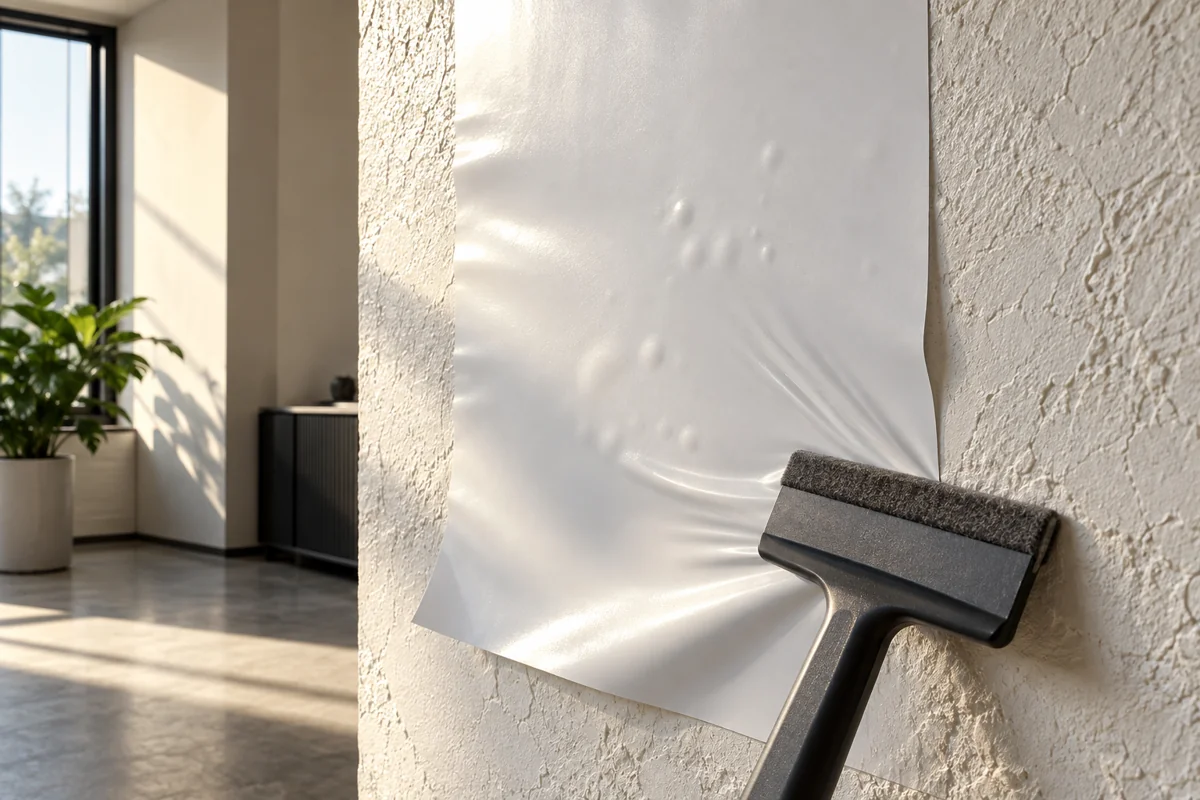
The sample looked perfect on the day. It was printed on the chosen film, applied to a smooth board and approved by everyone in the meeting room. Two weeks after installation on the real office wall, the edges are lifting and the texture shows through like orange peel. Nothing was wrong with the print, the ink or the film itself.
The wall was different from the sample board, and nobody tested it. This guide explains why textured and freshly painted walls behave differently and how to judge a wall before ordering. It covers paint curing, film choice for texture and the heat that application demands. It also explains when a mural belongs on a printed panel instead of the wall.
Why does a perfect sample fail on the real wall?
A sample on a smooth, glossy board tests the print, not the wall behind it. Real office walls vary in texture, paint chemistry and curing time. 3M's December 2024 wall guide states that no single film or adhesive works best on every paint tested.
The same guide notes that any given film can perform well on one paint and poorly on another. Low or zero VOC paints have changed how adhesives bond to fresh walls. So approve the artwork from a sample, but approve the wall separately with a test.
Quick Answer
A wall graphic sample on a smooth board proves the print, not the wall. 3M states no single film works best on every paint, so test the actual wall too.
How do you tell if a wall is too textured?
Run a fingertip across the wall, then look at it under raking light from a torch at one side. 3M classifies walls as smooth, medium or heavy texture and tests each differently. For heavily textured painted wallboard, it asks installers to contact its technical service first.
Loose surfaces are a firm no, according to 3M, including sand-textured blocks that shed grains when rubbed. Grout lines matter too, and 3M's textured-wall films work best when joints are no deeper than 3.2 mm. Deeper or undercut joints usually lift, especially within reach.
Quick Answer
Judge wall texture under raking light before ordering a graphic. 3M advises against loose surfaces and says its textured-wall films work best on grout lines no deeper than 3.2 mm.
What does a freshly painted wall need first?
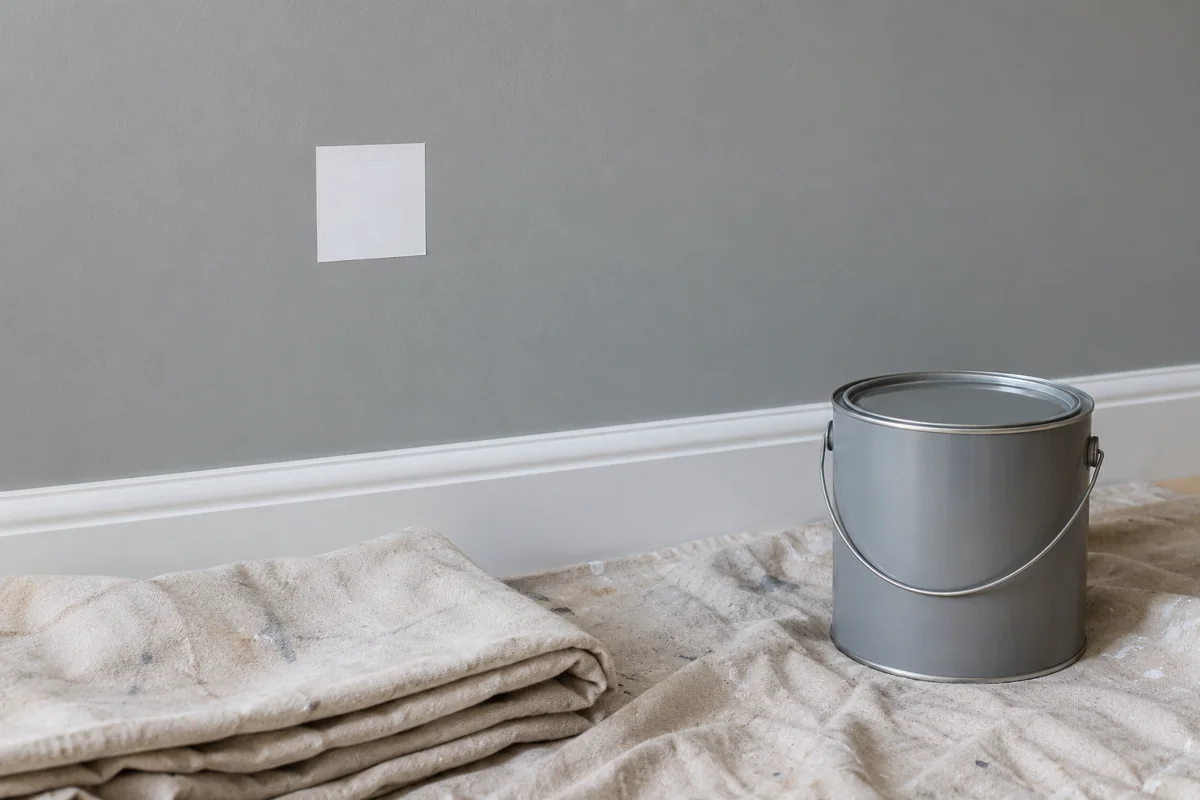
Fresh paint needs time to cure fully, not just dry to the touch. 3M notes most paints feel dry within an hour while their solvents keep evaporating. Applying film too early can cause poor adhesion, curling edges and bubbles as the paint outgasses.
Follow the paint manufacturer's recommended cure time, which varies widely by product and conditions. 3M also warns that low or zero VOC paints reduce film adhesion and that graffiti-resistant paints can contain silicones. Schedule painting early, then test adhesion on the wall before printing the full job.
Quick Answer
Freshly painted office walls need full curing before wall graphics go on. 3M warns that under-cured paint can outgas and lift film, and that low VOC paints reduce film adhesion.
Which film suits a textured wall?
Textured walls need a conformable film applied with high heat and foam rollers, not a standard plastic squeegee. 3M's IJ8624 film is made for moderately textured block, brick, industrial stucco and tile. Its application calls for an industrial heat gun sustaining about 538°C.
3M warns that insufficiently heated film can look good on the day, then lift days or weeks later. The same product is not recommended for rough gypsum wallboard, wallpaper or smooth surfaces. Ask your installer which textured-wall training, heat guns and rollers they actually use on site.
Quick Answer
Textured office walls need a conformable textured-wall film applied with high heat and specialist foam rollers. 3M says under-heated film can look fine initially, then lift days or weeks later.
When should a mural go on a panel instead?
Choose a printed panel when the wall is loose, heavily textured, wallpapered or must be returned undamaged. 3M warns that textured-wall film on wallcoverings or wallboard typically pulls off the paper during removal. A printed panel, fixed to the wall with suitable hardware, avoids that problem entirely.
Panels also travel with the business if the office moves to new premises. They cost more to fabricate and fix, and they add visible edges and some depth. For short leases or awkward walls, that trade is usually worth pricing alongside direct film.
Quick Answer
Print an office mural on a rigid panel when the wall is loose, wallpapered, heavily textured or rented. 3M warns that textured-wall film typically pulls off wallboard paper during removal.
Main Takeaways
A smooth sample board proves the print, never the wall. Check texture under raking light, prefer semi-gloss or gloss paint, let it cure fully and run an adhesion test before ordering. Textured walls need a conformable film, high heat and foam rollers, applied by trained installers. Choose a printed panel when the wall is loose, wallpapered, heavily textured or rented.
Getting a wall graphic that stays put
Most wall graphic failures are decided long before the printer even starts. The wall's texture, paint sheen and curing time matter as much as the artwork on the file. Ask for an adhesion test on the actual wall, in the actual room, under normal air conditioning. Then choose the film, heat and laminate around what that test really shows.
For a quote, send wall photos under side light, the wall size, paint type and painting date. Auronix Advertising coordinates wall graphics and murals as part of wider office branding in Dubai through partner producers. Reception areas raise different material questions, covered in our guide to reception signs that photograph well. We will confirm the film and method in writing first.
Sources & References
FAQs
Does paint sheen affect wall graphics?
Yes, according to Avery Dennison, which rates gloss and semi-gloss paints as good surfaces for adhesive graphics. Flat, matte and eggshell finishes are porous and can cause premature adhesion loss.
How long after painting can wall graphics be applied?
Wait for the paint manufacturer's full cure time, not the touch-dry time. If the schedule is tight, run an adhesion test on several wall areas before applying the full graphic.
Do wall graphics damage paint when removed?
They can, especially on weak or under-cured paint. 3M says removing IJ8624 may leave adhesive residue, remove some paint or damage mortar, so plan the removal before choosing direct application.
Why are the edges of my wall graphic lifting?
Common causes include uncured paint, low VOC paint, insufficient heat on texture and edges in high-traffic spots. 3M advises trimming film slightly short of vulnerable edges rather than wrapping them.
What is a wall graphic adhesion test?
It is a small trial piece applied to the real wall with the planned method. 3M suggests leaving its IJ8624 test piece for one week, then checking adhesion and removal.
Can wall graphics be applied over wallpaper?
It is risky, because 3M notes that vinyl and paper wallcoverings may contain plasticisers that cause adhesion failure. A printed panel or dedicated wallcovering print is usually the safer choice.
Do wall graphics work on brick or blockwork?
They can on moderately textured brick or block with sound, shallow mortar joints. 3M does not recommend IJ8624 over mortar joints deeper than 3.1 mm or square-cut and undercut joints.
Should office wall graphics be laminated?
Laminate wall graphics in corridors, pantries or anywhere people brush past or clean often. 3M states that printed graphics exposed to abrasion or harsh cleaners need protection to be warranted.
How long do indoor wall graphics last?
It depends on the film, the wall and daily handling. 3M Europe lists five years of interior durability for unprocessed IJ8624, based on illustrative laboratory tests rather than a guarantee.
Can a wall mural move with the business?
Direct-applied film cannot be reused once it is removed. A mural printed on a rigid panel or a framed fabric system can be unfixed and installed again in new premises.
