Advertising & Branding /
Hanging Flags and Banners at a Conference Venue: Rigging, Weight and Fire Rules
At major venues such as DWTC, the venue controls primary rigging, hanging banners must be lightweight and approved, drop weights must be sealed inside the banner, and fabrics need fire-retardant certification.
By Ashker
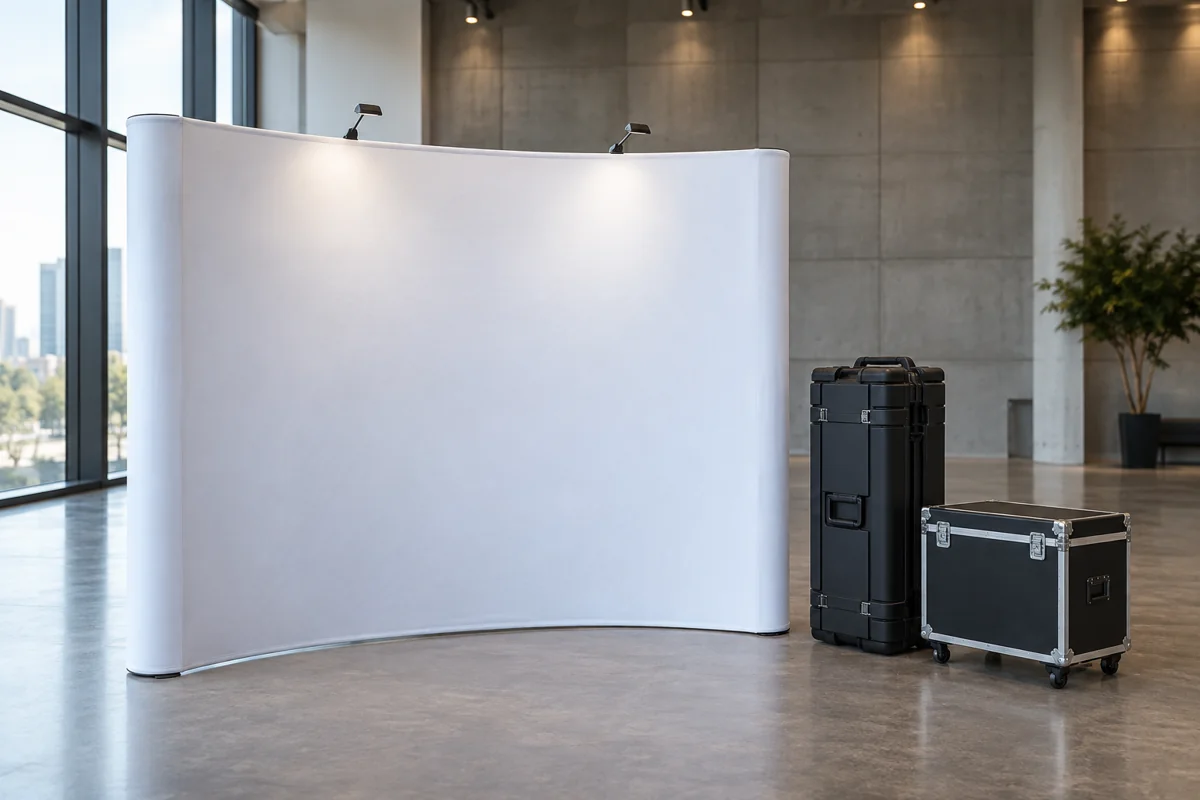
Hanging flags and banners above a conference floor make a brand visible from every corner. They also hang over the heads of delegates, which is why venues control them closely. At large UAE venues, you cannot simply tie a banner to the ceiling yourself. The venue's rigging team, fire rules and approval process decide what can hang, where and how.
This guide explains what a conference venue usually requires before anything is suspended overhead. It uses the Dubai World Trade Centre's published health and safety handbook as a detailed example. It covers rigging responsibility, banner weight and construction, fire certification and installation access. Other venues set their own rules, so always read the exhibitor manual for your specific event carefully.
Who is allowed to rig hanging banners at a venue?
At many venues, only the venue's team installs primary rigging from the roof. The Dubai World Trade Centre's health and safety handbook states that its Event Services Department is the sole provider of all top and primary rigging. All rigging there needs approval from its technical rigging team.
Your supplier provides the banner, attachment points and documents, while the venue rigs it. DWTC also reserves the right to inspect secondary rigging and refuse items that do not meet accepted standards. Book rigging early, because overhead slots are limited during build-up.
Quick Answer
At venues such as DWTC, only the venue's Event Services team installs top and primary rigging. Your supplier delivers the banner and documents, and the venue approves and rigs it.
How heavy can a hanging banner be?
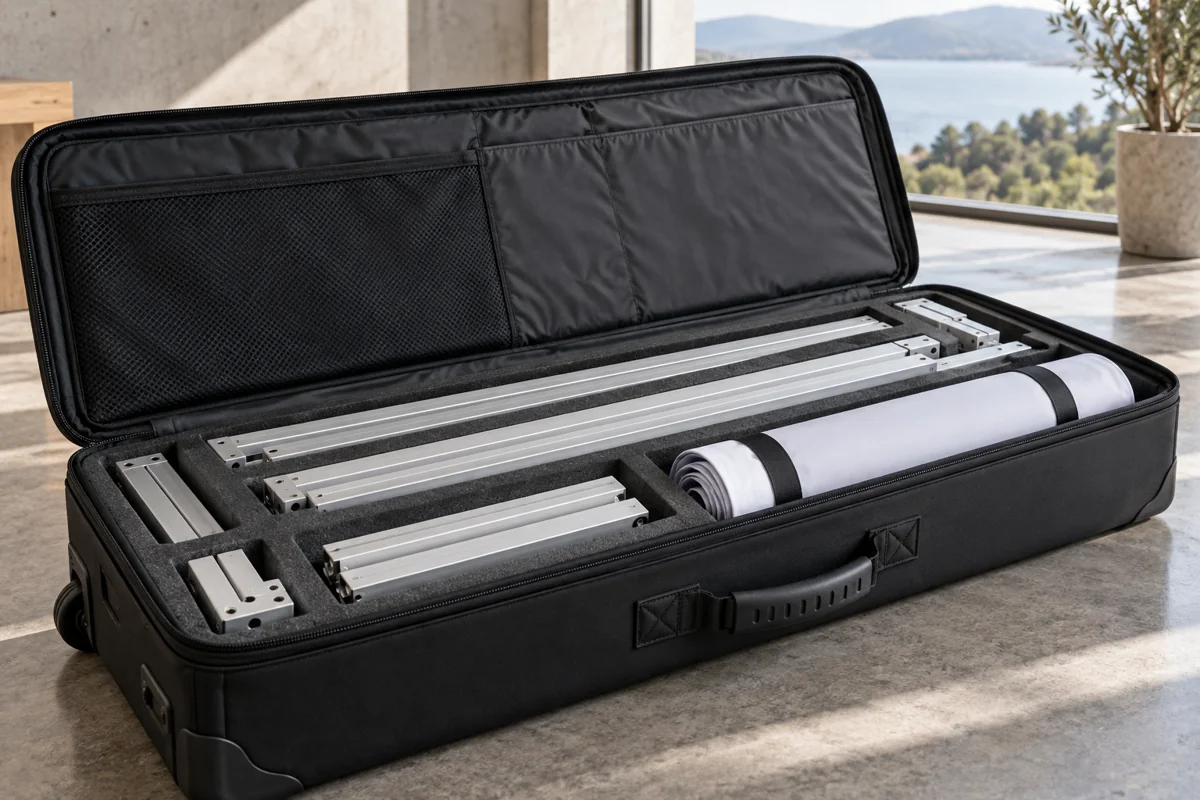
Venues limit suspended items to lightweight banners and require approval before anything hangs. DWTC's handbook says stands may not be suspended from the roof structure, permitting only lightweight banners and trusses for audio-visual and lighting purposes. Confirm maximum weights and fixing points for each event.
Ask your supplier for the finished weight of each banner, including frames, poles and bottom weights. Provide those figures with your rigging request so the venue can check its load limits. Lighter fabric banners with slim aluminium poles are easier to approve than rigid boards.
Quick Answer
Venues usually allow only lightweight banners overhead, and DWTC does not permit suspended stand structures. Give the venue each banner's finished weight, including poles and weights, with your rigging request.
How should drop weights and poles be built?
Bottom weights keep a hanging banner straight, but they must never be able to fall. DWTC's handbook allows drop weighting only when the weight is completely sealed within the banner. It must be secured by stitching or vinyl welding, not glued, stapled or similar methods.
Top and bottom poles should slide into sewn pockets and be fixed so they cannot slip out. Attachment points need to suit the venue's rigging hardware, so share drawings in advance. Ask your supplier to label each banner with its size, weight and hanging position.
Quick Answer
Seal bottom weights inside the banner by stitching or vinyl welding, never glue or staples, as DWTC requires. Fix poles securely in sewn pockets and label each banner for installation.
Which fire certificates do hanging fabrics need?
Venues commonly require fabrics to be fire retardant and certified before they arrive. DWTC limits drapes and materials to those treated in accordance with NFPA 701 or other internationally accepted standards. It also asks for third-party certification and lab sample testing well ahead of the event.
Request the supplier's fire certificate for the exact fabric before printing begins. Keep printed and digital copies with your event paperwork, because inspectors may ask during build-up. Our guide to reusable exhibition branding for shows abroad explains how certificates travel with a touring kit.
Quick Answer
Hanging fabrics usually need fire-retardant certification, such as NFPA 701 at DWTC, with third-party test evidence. Confirm the exact fabric's certificate before printing and carry printed copies to the venue.
How are hanging banners installed safely?
Overhead installation must use proper access equipment, not ladders balanced on loose furniture. DWTC requires ceiling and roof-level banners to be installed using a mobile working platform, such as a boom or scissor lift. Operators and installers must wear the required personal protective equipment.
Plan installation time into the build-up schedule, before stands and carpets fill the floor below. Confirm who supplies the lift, who operates it and when the rigging slot starts. For temporary flags at floor level instead, see our guide to indoor and outdoor flag base weights.
Quick Answer
DWTC requires overhead banners to be installed from a mobile working platform with protective equipment. Book lift access and rigging slots early in build-up, before the hall floor fills up.
Main Takeaways
Large venues such as DWTC control all top and primary rigging through their own teams. Hanging items must be lightweight, approved in advance and never part of suspended stand structures. Drop weights must be sealed inside banners by stitching or vinyl welding. Fabrics need fire certification such as NFPA 701, and installation needs proper access lifts and booked rigging slots.
Start with the venue manual, then design the banner
Download the exhibitor manual and the health and safety rules for your venue before anything else. Note the rigging process, weight limits, fire standards, lift access and every submission deadline. Share those details with your banner supplier before any design or printing work begins. Designing around the venue's rules avoids rejected banners, wasted freight and last-minute reprints during build-up week.
Auronix Advertising produces conference hanging flags in the UAE built for venue rigging approval and repeated use. Send your venue name, event dates, banner sizes, quantities and final artwork. We will provide finished weights, fabric certificates and attachment drawings for the venue's rigging team. For company flags flown outdoors on permanent poles, read our hoisting flag fabric and wind guide.
Sources & References
FAQs
Can exhibitors hang their own banners from the ceiling?
At venues like DWTC, no, because the venue's Event Services team provides all top and primary rigging. Exhibitors supply approved banners and supporting documents for the venue's team to install.
What makes a banner acceptable for hanging?
It should be lightweight, made from certified fire-retardant fabric and fitted with securely fixed poles and fully sealed weights. The venue must then approve the design, weight and hanging position.
Are suspended stand structures allowed at DWTC?
DWTC's health and safety handbook says stands are not permitted to be suspended from the roof structure. Only lightweight banners and audio-visual or lighting trusses are permitted, subject to approval.
How must bottom weights be fixed in a banner?
DWTC allows drop weights only when they are completely sealed inside the banner by stitching or vinyl welding. Glued, stapled or similar fixings are not accepted for banner weights there.
Which fire standard applies to hanging fabrics?
DWTC's handbook refers to NFPA 701 and other internationally accepted standards for drapes and materials. Other venues may name different national standards, so check each exhibitor manual before ordering fabric.
When should the rigging request be submitted?
Submit it as early as the venue's exhibitor manual allows, with finished weights, fabric certificates and drawings. Overhead rigging slots are limited during build-up, so late requests risk outright refusal.
What information should accompany a hanging banner?
Provide the banner size, finished weight, fabric certificate and clear drawings of all attachment points. Clearly label each banner with its agreed hanging position to speed up installation during build-up.
Who supplies the lift for overhead installation?
Venues often arrange or approve the lift and its operator, so confirm this during event planning. DWTC requires a mobile working platform, such as a scissor lift, for ceiling-level banners.
Can a hanging banner be reused at another venue?
Yes, if its fabric certificate, weight and construction meet the next venue's published rules. Always check the new venue's weight limits and fire standards before shipping the same banner there.
Can Auronix produce venue-compliant hanging banners?
Yes, Auronix Advertising produces hanging banners with certified fire-retardant fabric, stitched-in sealed weights and clearly labelled fittings. We also supply finished weights and documents for the venue's rigging approval process.
