Advertising & Branding /
A Flag Set for a Summit Stage That Looks Right on Camera
A summit stage flag set looks right on camera when every flag matches in size and height, bases are weighted and kept within the stage area, fabric avoids glare under lights and venue rules are followed.
By Ashker
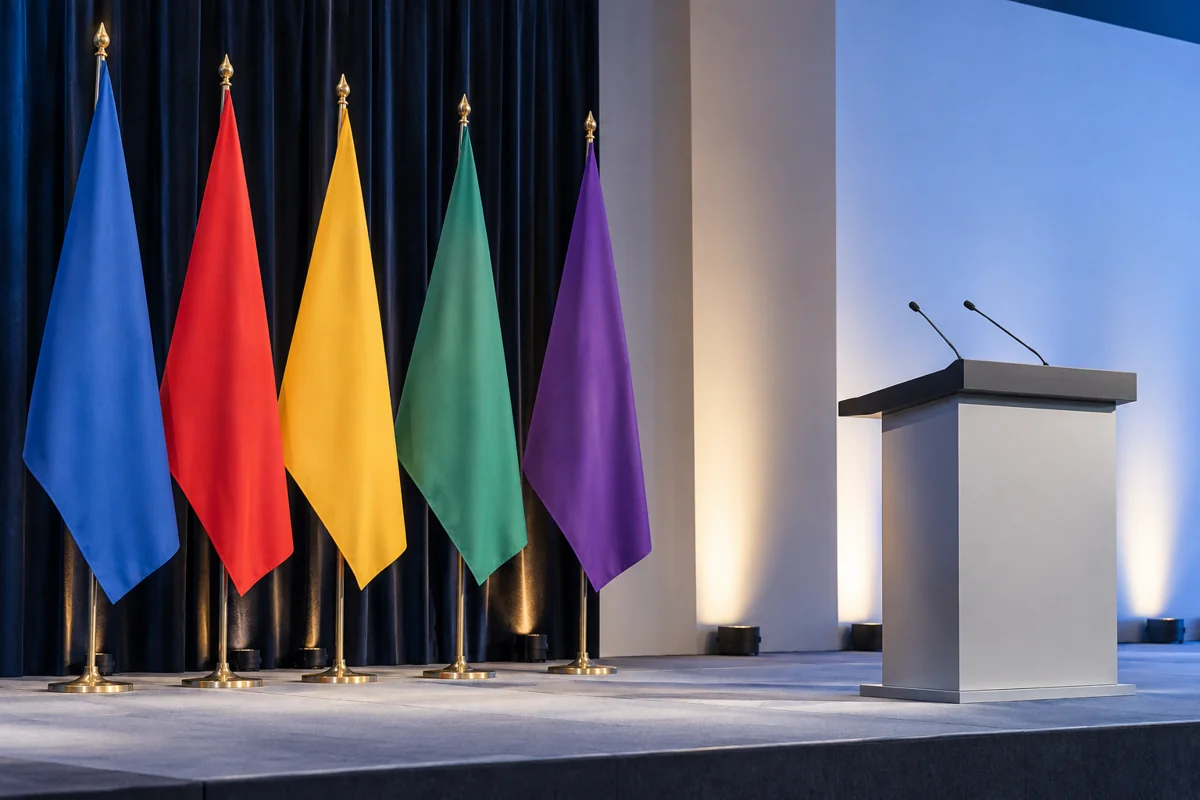
International summits, government forums and corporate conferences in the UAE often place a row of national or organisational flags on stage. Those flags appear in every press photograph and livestream. A crooked pole, an uneven row or a shiny fabric that flares under stage lights is noticed immediately. Good planning makes the set look calm, balanced and dignified on camera.
This guide explains how to plan a conference flag set for a summit stage. It covers arrangement and order, matching heights, weighted bases, fabric that suits stage lighting and venue clearance rules. It refers to the United Nations Flag Code and the Dubai World Trade Centre safety handbook. Each section ends with a short answer for your event production team.
How should flags be arranged on a summit stage?
Agree the arrangement and order with the host's protocol office before ordering the set. The United Nations Flag Code places member flags in English alphabetical order, starting from the left, in line or semi-circle groupings. Many international events follow this neutral approach.
The same code says flags shown with the UN flag should share its level and be equal or smaller in size. Applying that principle to the whole set avoids any suggestion that one country or organisation ranks higher. Keep equal spacing between poles so the row looks unified.
Quick Answer
Agree the order with the host's protocol office first. The UN Flag Code uses English alphabetical order from the left, with flags level and no larger than the UN flag.

How do you match flag heights across the whole set?
Use the same pole model, base model and finial for every flag, so the tops line up exactly. Mixed hardware from different suppliers almost always produces small height differences that cameras exaggerate. Measure each assembled flag from the stage floor to the top of the finial.
Check the row from the main camera position during rehearsal, not just from the stage itself. Uneven stage risers, carpet joins and cable covers can tilt poles slightly. Our guide to telescopic flags for venues with different ceilings explains adjustable poles for varied venues.
Quick Answer
Use identical poles, bases and finials so every flag top lines up exactly. Measure each assembled flag, then check the row from the main camera position during the technical rehearsal.
Which bases keep stage flags stable and safe?
Use weighted bases heavy enough to stop flags tipping when speakers, cables or crew brush past them. Cross bases with weight plates suit stages with limited space. Keep bases on the stage itself, away from steps, ramps and the stage edge.
Venues set clearance rules around stages, so check them before placing flags. The DWTC health and safety handbook requires a 4 metre clear distance behind a stage whose backdrop blocks an exit door. It requires 2 metres where there is no backdrop and no fire or shutter doors behind.
Quick Answer
Use weighted bases that resist knocks from speakers, cables and crew, and keep them on stage, away from steps. DWTC requires clear distances behind stages, so check venue rules first.
Which fabric avoids glare under stage and broadcast lights?
Shiny satin fabrics can flare under strong stage lights and look washed out on camera. Matte or low-sheen knitted polyester usually photographs more evenly under stage lighting. Ask your supplier for a fabric sample and test it under the actual lighting rig during rehearsal.
Backlighting can make single-layer flags look see-through, showing reversed designs from behind. Double-sided flags with a blockout layer avoid that problem for stages with lit backdrops or LED screens. Steam every flag on the day of the event, because creases show clearly in close-up press photographs.
Quick Answer
Choose matte or low-sheen fabric, because satin can flare under stage lights. Use flags with blockout layers in front of lit backdrops, and steam out all creases before the event.
Which fire safety checks apply to stage flags?
Venues usually require fabrics used on stages and in halls to meet fire safety standards. The DWTC handbook limits drapes to material treated to be fire retardant under NFPA 701 or another accepted standard. Ask the venue's safety team which standard applies to stage flags.
Request fire test certificates for the exact fabric from your supplier and keep copies with the event paperwork. Submit them early if the venue requires formal approval before installation day. Our guide to conference hanging flags and rigging weight covers flags suspended above the audience.
Quick Answer
Ask the venue which fire standard applies, since DWTC limits drapes to fire retardant material under NFPA 701 or an accepted equivalent. Keep the fabric certificates with the event paperwork.
Main Takeaways
Agree the display order with protocol staff, using the UN Flag Code's alphabetical approach where suitable. Use identical poles, bases and finials so every top lines up, and check the row from the main camera position. Choose matte, double-sided fabric that suits stage and broadcast lighting. Follow venue clearance and fire rules, such as DWTC's NFPA 701 requirement for drapes.
Rehearse the flags like any other stage element
Stage flags deserve the same rehearsal attention as lighting, sound and screen content, because cameras capture every detail. Confirm the display order, heights and bases with protocol and production teams well before the event. Check the whole row from the main camera position during the technical rehearsal. Then steam, inspect and photograph the complete set before the doors open to guests.
Auronix Advertising coordinates conference flags in the UAE for summits, forums, exhibitions and corporate events. Send us your country or organisation list, the stage plan and your event date. We will recommend matching poles, weighted bases and low-glare fabric that suit your stage and lighting. Request a quote early, so samples can be tested before your next major event.
Sources & References
FAQs
How should national flags be ordered on a conference stage?
Confirm the running order with the host's protocol office before the stage is fully dressed. The UN Flag Code places member flags in English alphabetical order, starting from the left.
Should all stage flags be the same size?
Yes, a matched set keeps every delegation equal in photographs and on screen. The UN Flag Code says flags beside the UN flag should be equal or smaller in size.
How do I make sure stage flags are the same height?
Use identical poles, bases and finials from one supplier, then measure each assembled flag from floor to tip. Check the whole row from the main camera position during the rehearsal.
Which fabric looks best on camera?
Matte or low-sheen polyester usually photographs more evenly than shiny satin, which can flare under strong stage lights. Test fabric samples under the real lighting rig before ordering the set.
Why do flags look see-through on stage?
Backlighting from LED screens or lit backdrops can shine through single-layer fabric and reveal the reversed design. Flags with a blockout layer prevent this problem on brightly lit conference stages.
What base should I use for stage flags?
Use weighted bases heavy enough to resist knocks from speakers, crew and cables during the event. Keep them on the stage itself, away from steps, ramps and the stage edge.
Do venues have clearance rules around stages?
Yes, many venues set them, so check the floor plan rules before placing flags. The DWTC handbook requires 4 metres clear behind a stage whose backdrop blocks an exit door.
Do stage flags need fire certificates?
Ask the venue's safety team, because fire requirements vary between venues and events. The DWTC handbook limits drapes to fire retardant material under NFPA 701 or an accepted international equivalent.
How do I remove creases from stage flags?
Steam each flag carefully on the day of the event, following the supplier's care instructions for the fabric. Creases and folds show clearly in close-up press photographs and on livestreams.
Can Auronix arrange a conference flag set?
Yes, Auronix Advertising coordinates complete conference flag sets with matching poles, weighted bases and low-glare fabric. We help check heights, display order and venue rules well before the event day.
