A/B Testing When You Only Get 200 Visitors a Day
Short Answer
At 200 visitors a day, a typical A/B test can need well over a year to reach significance. Small sites usually learn faster from recordings, user feedback and carefully tracked before-and-after changes.
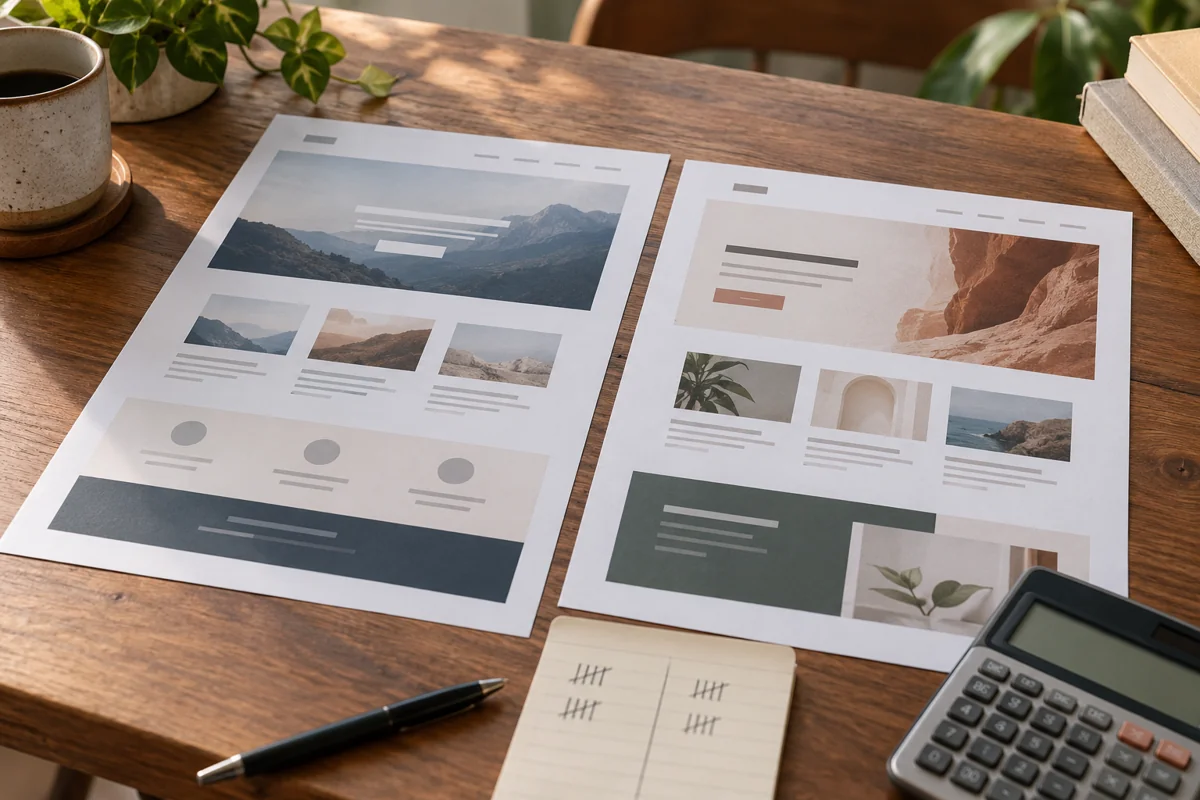
Split testing sounds like the scientific way to improve a website, and many business owners want to try it. On a small UAE business site with a few hundred visitors a day, the maths usually gets in the way. A test can run for months without producing a trustworthy answer. Meanwhile, obvious problems on the page stay unfixed while everyone waits.
This practical guide explains why A/B tests struggle on low-traffic websites and what to do instead. It includes a worked sample-size example using figures from Optimizely's documentation. It also covers qualitative research tools, bolder test designs, higher-volume test steps and simple before-and-after measurement of changes. Each section ends with a short answer you can share with your marketing team.
Why do A/B tests struggle on low-traffic websites?
An A/B test needs enough visitors and conversions in each version to separate a real difference from random noise. Small sites often record only a handful of conversions per week, so daily results swing wildly. Early winners frequently disappear once more data arrives over the following weeks.
Optimizely's documentation defines the minimum detectable effect as the relative improvement over the baseline you are willing to detect. It explains that the smaller this effect is, the larger the sample size required. Small sites therefore struggle to detect modest improvements with confidence.
Quick Answer
A/B tests need enough visitors and conversions to separate real differences from random noise. Optimizely explains that smaller detectable effects require larger samples, which most low-traffic business sites rarely have.

How long would a test take at 200 visitors a day?
Optimizely's sample size table shows 51,141 visitors per variation for a 3% baseline conversion rate and a 10% minimum detectable effect at 95% significance. A test with two versions would need about 102,282 visitors in total. That is a very demanding target for most small business websites.
At 200 visitors a day, reaching 102,282 visitors would take roughly 511 days. Seasonal changes, campaigns and website updates during that period could also complicate the final result. For most small sites, that timescale makes a classic split test impractical for modest changes.
Quick Answer
Using Optimizely's figure of 51,141 visitors per variation, a two-version test needs about 102,282 visitors in total. At 200 visitors daily, split evenly, collecting that sample takes roughly 511 days.
What should a small site do instead of a split test?
Watch how real visitors use the page before guessing at changes. Microsoft Clarity offers session recordings and heatmaps, and Microsoft describes it as a free service. Recordings often reveal broken buttons, confusing forms, ignored sections and missed calls to action quickly.
Combine those observations with feedback from customers, sales staff and a few simple usability sessions. Fix clear problems directly instead of testing them, because a broken contact form does not need a split test to prove it. Our guide to conversion rate optimisation for UAE websites covers common fixes.
Quick Answer
Use session recordings, heatmaps and customer feedback to find problems, then fix the obvious issues quickly. Microsoft Clarity provides recordings and heatmaps, and Microsoft describes it as a free service.
When can a low-traffic site still run a useful test?
Tests become more practical when the expected change is large, such as a completely different offer or page layout. Optimizely's table shows that larger detectable effects need far fewer visitors. Testing a small button colour change rarely makes sense on a small business site.
Testing an earlier step with more activity, such as clicks to a contact page, also gathers data faster. Google Optimize is no longer available, as Google confirms it closed on 30 September 2023. Google lists AB Tasty, Optimizely and VWO as integration options with Google Analytics.
Quick Answer
Test bold changes or earlier, higher-volume steps such as contact page button clicks. Google Optimize closed on 30 September 2023, and Google lists AB Tasty, Optimizely and VWO as alternatives.
How do you measure changes without a formal test?
Record a baseline before changing anything, including leads, calls, form submissions and conversion rate over several weeks. Make one significant change at a time and note the date in a change log. Then compare a period of the same length after the change, using identical reports.
Before-and-after comparisons are weaker than controlled tests, because seasons and campaigns can affect results. Compare with the same period last year where possible and watch for unusual traffic sources. Our guide to GA4 lead tracking for UAE websites explains how to measure enquiries reliably.
Quick Answer
Record a baseline, make one significant change at a time and log the date. Compare equal periods before and after, remembering that seasons, holidays and campaigns can easily distort results.
Main Takeaways
Most low-traffic sites cannot reach significance when testing modest changes within a reasonable timeframe. Optimizely's figure of 51,141 visitors per variation means about 511 days at 200 visitors daily for a two-version test. Use recordings, heatmaps and feedback to find problems, and fix obvious issues directly. Test only bold changes or high-volume steps, and log every change with its date.
Learn from visitors before testing them
Low traffic does not mean you cannot improve a website or grow enquiries over time. It means learning from visitors in different ways than large ecommerce brands do. Start with recordings, heatmaps and customer feedback to find the biggest problems on your key pages. Then fix them carefully, one at a time, and measure the results against a recorded baseline.
Auronix offers SEO and performance services for UAE websites, including conversion reviews for low-traffic sites. Send us your main website address, monthly traffic figures, current conversion data and main enquiry goal. We will review recordings, analytics and page speed, then recommend practical changes in clear priority order. Request a quote to start with your most important landing page this month.
Sources & References
FAQs
Questions readers usually ask next
These FAQs are written to match the topic of this post and to help readers move from understanding to action.
How much traffic do you need for an A/B test?
It depends on your baseline conversion rate and the smallest improvement you want to detect. Optimizely's table shows 51,141 visitors per variation for a 3% baseline and a 10% effect.
What is a minimum detectable effect?
Optimizely defines it as the relative minimum improvement over the baseline you are willing to detect. Smaller effects need much larger samples before test results can reach reliable statistical significance.
Can I stop a test early if one version is winning?
Stopping early on a small sample can mislead, because early leads often disappear with more data. Follow your testing tool's guidance on when results become reliable enough to act on.
Is Google Optimize still available?
No, Google confirms Google Optimize and Optimize 360 are no longer available as of 30 September 2023. Google lists AB Tasty, Optimizely and VWO as third-party testing options for Analytics.
What is Microsoft Clarity?
It is a behavioural analytics tool from Microsoft that offers session recordings, heatmaps and funnels. Microsoft describes Clarity as a free service forever, with no obligation to buy an upgrade.
Should I test button colours on a small website?
Usually not, because small effects need huge samples to detect, whatever the change's size. Focus first on bigger issues such as unclear offers, slow-loading pages, weak headlines or broken forms.
How do I measure a change without A/B testing?
Record a baseline of leads and conversions over several weeks, make one significant change and log the date. Compare equal periods before and after, allowing for seasons and marketing campaigns.
What can I test with low traffic?
Test bold changes with larger expected effects, or earlier steps with more activity, such as clicks to a contact page. These steps reach usable sample sizes faster than final enquiries.
Are before-and-after comparisons reliable?
They are less reliable than controlled tests, because seasons, campaigns and traffic changes can affect results. A clear change log and equal comparison periods help to reduce that risk considerably.
Can Auronix improve conversions on a low-traffic site?
Yes, Auronix reviews recordings, analytics and page performance to find practical improvements for low-traffic websites. We prioritise valuable fixes and track results with clear, honest before-and-after measurement over several weeks.
Related Resources
Need help choosing the right stack?
We help UAE businesses keep public pages fast, indexable, and conversion-friendly, then reserve heavier frameworks for the parts that actually need them.
Built for search-ready UAE websites that need clarity, speed, and trust.
